Why Aluminium Downcycling is Holding Back Circular Construction
Recycling aluminium is only part of the story. Preventing downcycling is key to achieving true circularity in construction.
Aluminium is often celebrated as an infinitely recyclable material, yet some of the aluminium recovered from buildings never returns to the built environment. The challenge lies not in recycling the material, but in preserving its value.
Aluminium has earned a prominent place in sustainable construction. Lightweight, durable and corrosion-resistant, it is widely used in curtain walling, windows and doors, while its recyclability has helped position it as one of the industry's most sustainable materials.
As the focus within construction shifts towards circular economy principles, attention is turning to what happens to materials after they are recovered from a building. A product's environmental credentials are no longer judged by whether it can be recycled, but whether it can continue to fulfill the same function after recycling.
Beyond recycling
Much of the industry's sustainability narrative around aluminium centres on a single fact: aluminium can be recycled infinitely. Whilst this is true, it doesn't guarantee that aluminium recovered from a building will return as a building product.
Architectural aluminium systems are manufactured using carefully controlled alloys designed to deliver specific structural and performance characteristics. When these materials enter conventional recycling streams, they are often mixed with aluminium from a variety of use and applications. The resulting material remains recyclable, but the new alloy composition may no longer be suitable for architectural use.
This process, known as downcycling, is one of the lesser known challenges facing efforts to create a circular built environment.
The problem with downcycling
Downcycling occurs when a material is recycled into a product with lower performance requirements than its original application.
For construction-grade aluminium, this can mean that valuable material from windows, doors and facades being redirected into products where the stringent alloy requirements associated with architectural systems are no longer necessary.
Once those alloy characteristics have been lost, they cannot be recreated through further recycling.
The aluminium itself continues to exist, but it can no longer return to the high-performance extrusion applications required by the construction sector. In effect, the material has left the architectural value chain completely.
That distinction is critical, because circular construction depends not only on recovering materials, but on retaining their ability to serve the same purpose over multiple lifecycles.
Why material quality matters
Maintaining construction-grade aluminium requires a far greater level of control than many people realise.
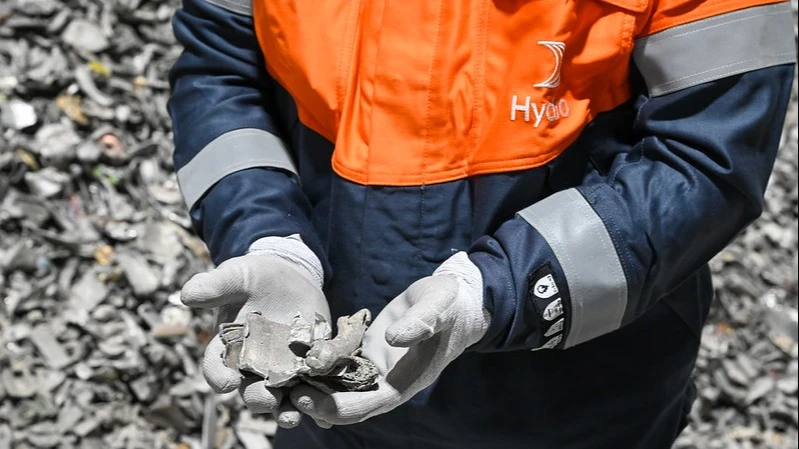
Aluminium recovered from existing buildings must be carefully processed to remove coatings, sealants, steel fixings and other contaminants. Different alloy types also need to be identified and separated.
Without this level of intervention, valuable architectural aluminium can quickly become unsuitable for future architectural applications.
For this reason, producing high-quality recycled aluminium is not simply a matter of collecting and remelting scrap. Protecting alloy integrity throughout the process is essential if the material is to remain suitable for use in windows, doors and facades.
Preserving value through closed-loop recycling
Closed-loop recycling addresses this challenge by keeping recovered aluminium within a controlled recycling process designed specifically to preserve material quality.
Rather than entering mixed scrap schemes, end-of-life aluminium from buildings is recovered and sorted separately before being remelted and returned to new architectural products. The objective is straightforward: aluminium from buildings should remain aluminium for buildings.
This approach plays an important role in supporting circular construction because it retains the material and its value within the built environment.
A unique position within the Hydro Group
TECHNAL's connection to the Hydro Group provides a distinctive advantage in this regard.
As part of Hydro's integrated value chain, TECHNAL is connected to every stage of the aluminium recycling journey, from material recovery and sorting through to remelting, extrusion and the manufacture of new aluminium architectural systems.
This level of integration provides full visibility of the process and removes much of the uncertainty that can exist within fragmented recycling supply chains. Rather than relying on multiple independent parties, the aluminium remains under the stewardship of the Hydro Group and TECHNAL throughout its journey.
As a result, TECHNAL can provide confidence in the provenance of the material and verification of how it has been processed before returning to the built environment.
Video unavailable due to cookie preference
This YouTube video is blocked because you declined third-party cookies. To view it, please allow Marketing cookies
The role of Hydro CIRCAL®
Producing construction-grade recycled aluminium requires extensive technical expertise and rigorous quality controls.
Hydro CIRCAL® is manufactured using post-consumer aluminium recovered from products that have completed their service life, including windows, doors, facades and other components. Before remelting, the material undergoes advanced analysis to identify alloy types and remove contaminants that would compromise quality. Hydro's process incorporates sophisticated sorting technologies, alloy management and batch-level traceability to ensure that the recycled alloy continues to meet demanding performance requirements needed for construction. Hydro CIRCAL® contains a minimum of 75% post-consumer aluminium, and Hydro CIRCAL® 75R is available as standard with no additional cost across the UK and Ireland product range.
This rigorous process is what allows recovered aluminium to be transformed into high-quality material suitable for new TECHNAL architectural aluminium applications rather than being lost to lower-value uses.
Circularity requires more than recycling
As the construction sector works towards reducing embodied carbon and improving resource efficiency, the conversation around aluminium needs to move beyond recycling alone.
The challenge is not whether aluminium can be recycled. It's whether valuable architectural aluminium can remain within the construction sector once it reaches the end of its lifecycle.
Video unavailable due to cookie preference
This YouTube video is blocked because you declined third-party cookies. To view it, please allow Marketing cookies
Where downcycling occurs, that opportunity is lost. Where alloy integrity is preserved through closed-loop recycling, the material can continue to contribute to future generations of buildings.
Through its position with the Hydro Group, TECHNAL is helping to support this approach, connecting the construction industry to a recycling model that prioritises traceability, quality and long-term material value.
In a truly circular economy, the most sustainable outcome is not just recycling aluminium. It is also ensuring that today's windows, doors and facade's become the new raw material for tomorrow's.
Summary
As the construction industry moves towards a more circular economy, attention is shifting from whether materials can be recycled to how they are recycled. While aluminium is often promoted as being infinitely recyclable, sometimes the material is downcycled into lower-value products and cannot return to the high-performance architectural applications for which it was originally designed. Through Hydro's closed-loop process, TECHNAL can help to preserve the value of construction-grade aluminium, ensuring it remains within a fully traceable and controlled value chain. By maintaining alloy integrity, rigorous quality standards and complete transparency throughout the recycling journey, TECHNAL and the Hydro Group is helping to keep aluminium in construction and supporting a genuinely circular built environment.
Whether you're developing a circular renovation strategy, specifying facade systems or exploring opportunities to reduce the environmental impact of a project, TECHNAL can help you understand how our closed-loop recycling process supports genuine material circularity.
Want to see more?
You may also be interested in
Let's Discuss Your Next Project
From concept design to specification and delivery, our team can help you achieve your design, performance and sustainability goals.
Contact us