Swing Door Systems
Explore TECHNAL's swing door systems designed for commercial and public buildings. Secure, durable, and made from Hydro CIRCAL® recycled aluminium
Swing door systems are widely used in commercial and public buildings, providing practical access solutions while supporting safety, accessibility and architectural design. From healthcare facilities and schools to offices, hotels and retail environments, selecting the right door system is an important part of building specification.
A typical swing door system comprises a door leaf, frame, hinges or pivots, closing hardware and, where required, an automatic operating mechanism. Depending on the building's requirements, doors can be manually operated or automated to accommodate pedestrian movement and improve ease of access.
For architects, contractors and commercial specifiers, choosing the right configuration involves considering traffic levels, available space, security, regulatory requirements and long-term performance.
As a specialist in architectural aluminium systems, TECHNAL offers door solutions and technical resources to support commercial building projects.
This guide explores the different types of swing doors, how they operate, conversion options, specification considerations, costs and applications across UK commercial sectors.
What Are the Different Types of Swing Door Systems?
Commercial swing door systems vary according to their opening direction, supporting hardware and operating mechanism. The most suitable configuration depends on pedestrian traffic, available space, accessibility requirements and the building's intended use.
Single-Action and Double-Action Swing Doors
Single-action swing doors open in one direction, either inwards or outwards. They are commonly specified for offices, schools and commercial entrances where pedestrian movement follows a defined route.
Double-action doors open in both directions, making them useful for busy internal circulation areas, healthcare facilities and service corridors where people regularly move between spaces.
Selection should also consider controlled closing, finger protection, threshold design and the durability of components under frequent use.
Pivot and Hinged Swing Door Systems
Hinged swing doors rotate on hinges fitted along one vertical edge of the door leaf. They provide a familiar, practical solution for many commercial entrances.
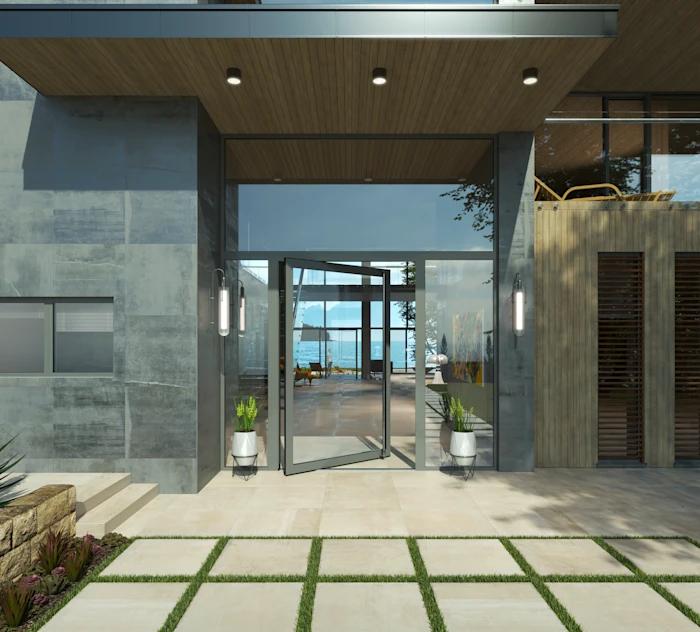
Pivot swing doors rotate around a pivot axis, which may be positioned away from the door's edge. This arrangement can accommodate particular architectural designs and create a distinctive appearance, especially with larger glazed entrance doors.
Both configurations require careful consideration of door dimensions, weight, opening clearance and hardware performance.
Automatic Swing Door Systems
Automatic swing door systems use powered operators to open and close the door leaf. Activation may be controlled through motion sensors, push buttons or integrated access control systems.
These systems are particularly useful in busy healthcare buildings, accessible entrances and high-traffic commercial environments where convenient, hands-free access is important.
Safety sensors, opening speeds, operating forces and maintenance requirements must be considered during specification.
Importantly, a complete automatic doorset is different from a standalone operator, which must be assessed for compatibility with the intended door assembly.
How Do Swing Door Systems Work?
Swing door systems operate by allowing a door leaf to rotate around a vertical axis, supported by hinges or pivot mechanisms. This movement creates an opening for pedestrians while allowing the door to return to its closed position.
Components such as door closers, locks, seals and operating hardware help control movement, maintain security and support the building's overall performance.
Manual Swing Door Operation
Manual swing doors open when a user pushes or pulls the door leaf. Hinges or pivots support its movement, while a door closer can regulate the closing speed and help prevent the door from slamming.
Door weight, opening force and hardware selection are particularly important in busy commercial environments. Doors must be manageable for intended users while remaining durable enough to withstand frequent operation.
Regular inspection and adjustment help maintain reliable movement, effective closing and safe access.
How Automatic Swing Door Operators Work
Automatic swing door systems use an electrically powered operator to move the door leaf through a controlled opening and closing cycle.
Activation can occur through motion sensors, push plates or connections to access control systems. Safety sensors monitor the door's operating area to help reduce the risk of contact with pedestrians.
Depending on the installation and its intended use, automatic systems may also require manual override functions, emergency operating arrangements or integration with fire safety controls.
The complete powered door assembly, including its operator, sensors, hardware and surrounding clearances, must be assessed to ensure safe and reliable operation.
Automatic Swing Door Systems for Commercial Entrances
Automatic swing door systems provide convenient access to commercial and public buildings, particularly where pedestrian traffic is frequent or users may have difficulty operating manual doors.
They are commonly specified for healthcare facilities, offices, retail premises and accessible entrances. Depending on the project, automation may be incorporated into a purpose-designed doorset or added to a compatible existing manual door.
Choosing Automatic Swing Doors for High-Traffic Environments
Selecting commercial automatic swing door systems requires careful consideration of pedestrian volumes, door dimensions and frequency of operation.
Powered operators must be suitable for the door's weight and expected usage, while opening speeds and closing cycles should support efficient movement without compromising safety.
For entrances with controlled access, automatic doors may also be integrated with security systems or building management controls.
Durable hardware, reliable closing mechanisms and appropriate maintenance arrangements are particularly important in buildings with continuous pedestrian activity.
Safety and Accessibility of Automatic Swing Doors
Safety is a central consideration when specifying automatic swing doors. Moving door leaves can create hazards around hinges, pivots and the surrounding opening area.
Appropriate safety sensors and protective measures help reduce the risk of contact with pedestrians during operation.
Accessibility requirements must also be considered, including clear opening widths, suitable activation controls and sufficient space for wheelchair users and people with reduced mobility.
In the UK, powered pedestrian doors should be assessed against relevant safety requirements, including BS EN 16005, alongside applicable Building Regulations.
Correct installation, commissioning, regular inspection and maintenance are essential. Automatic operation alone does not guarantee that an entrance is accessible or compliant.
Specification, Compliance and Building Performance
Specifying swing door systems for commercial buildings involves more than selecting an opening mechanism. Architects, contractors and façade consultants must consider accessibility, fire safety, security and overall building performance.
Key specification considerations include:
Accessibility: Approved Document M provides guidance on access to and use of buildings in England. Clear opening widths, door opening forces, thresholds and operating controls should be assessed to support inclusive access.
Fire safety: Door opening direction, closing mechanisms and escape routes must align with the building's fire strategy and applicable requirements. In England, specifiers should refer to the current version of Approved Document B, including amendments effective from 30 September 2026.
Thermal and acoustic performance: Frame profiles, glazing, seals and thresholds influence heat loss, weather resistance and acoustic comfort, particularly for external aluminium swing doors.
Security: Suitable locks, access controls, glazing and hardware should reflect the building's security requirements and expected usage.
Façade integration: Door systems must be coordinated with adjacent windows, curtain walling and other building envelope components to maintain consistent performance and architectural appearance.
The complete doorset should be evaluated against relevant project requirements, rather than assuming that individual components guarantee compliance.
For commercial swing door specification in the UK, reviewing current technical documentation and consulting system manufacturers early in the design process can help identify suitable configurations and avoid installation issues.
How Much Do Swing Door Systems Cost in the UK?
The cost of swing door systems in the UK varies considerably depending on the door configuration, materials, dimensions and technical requirements. For commercial projects, pricing should reflect the complete entrance system rather than the door leaf or operating hardware alone.
Several factors influence the overall investment:
Operation: Manual swing doors generally require fewer components than automatic systems, which need powered operators, activation controls and safety sensors.
Configuration: Single and double doors, larger glazed panels and specialist pivot arrangements can affect manufacturing and installation costs.
Materials: Aluminium swing doors offer durability, design flexibility and relatively low maintenance requirements, while timber alternatives may require different finishing and ongoing care.
Performance: Enhanced security, thermal insulation, acoustic requirements and specialist glazing can increase specification costs.
Installation: Site preparation, electrical connections, commissioning, access control integration and ongoing maintenance should be included in project budgets.
Converting an existing manual door to automatic operation may cost less than replacing the complete doorset, provided the original assembly is suitable. However, structural modifications or incompatible hardware can make replacement more economical over the system's expected service life.
As commercial entrance requirements differ significantly between projects, obtaining a detailed quotation based on dimensions, operating conditions and performance specifications is more reliable than using generic residential door prices.
Applications of Swing Door Systems Across UK Commercial Sectors
Swing door systems are used throughout UK commercial buildings, with different configurations selected according to pedestrian traffic, accessibility, security and operational requirements.
Healthcare and NHS facilities: Automatic swing doors can support accessible movement for patients, visitors and staff, particularly where wheelchairs, hospital beds and medical equipment need to pass through entrances. Safety detection and controlled access are important considerations.
Schools and educational buildings: Durable manual swing doors are commonly used in classrooms and circulation areas. High-frequency use, safeguarding, access control and ease of maintenance influence specification.
Commercial offices: Aluminium swing doors can complement contemporary glazed façades while supporting accessibility and security. Automatic operation may be appropriate for main entrances and frequently used circulation routes.
Retail and shopping centres: Commercial automatic swing door systems can improve convenience at busy entrances, particularly for customers carrying shopping or using mobility aids. Reliable operation and pedestrian safety are essential.
Hotels and leisure facilities: Entrance systems must balance guest convenience, accessibility and architectural appearance. Acoustic performance and controlled closing may also be important.
Factories and industrial facilities: Robust swing doors can provide controlled pedestrian access between designated areas, where suitable for the operating environment. Durability, security and separation from vehicle movements require careful consideration.
Across these sectors, selecting the appropriate doorset and operating hardware helps support safe circulation, reliable performance and long-term maintenance planning.
Specify Commercial Swing Door Systems with TECHNAL
Choosing the right swing door systems requires careful consideration of building use, accessibility, safety, security and architectural design. From manual entrances to automated configurations, every component must work together to deliver reliable, long-term performance.
TECHNAL provides architectural aluminium door solutions for commercial buildings, supported by technical documentation and specification resources. Its TITANE Next door system is designed for demanding, high-traffic applications, making it a relevant option for projects requiring robust entrance solutions.
Architects, contractors and fabricators can explore available configurations, glazing options, hardware and performance information when evaluating suitable systems. Where automatic operation is required, compatibility with the proposed operator and complete doorset must be confirmed.
Early coordination with surrounding windows, curtain walling and façade elements can also help achieve consistent architectural detailing and building performance.
Planning a commercial entrance project? Explore TECHNAL's architectural aluminium door solutions and contact the team for technical guidance, product information and support with your project specifications.
Your products

Let's Discuss Your Next Project
From concept design to specification and delivery, our team can help you achieve your design, performance and sustainability goals.
Contact us