- ArchitectFaulknerBrowns
- Year2011
- CitySunderland
- CountryUnited Kingdom
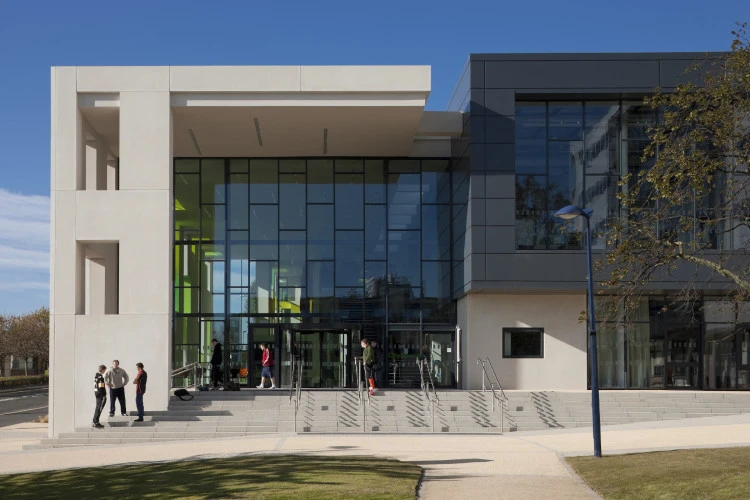
The redevelopment of the University of Sunderland’s CitySpace building demonstrates how thoughtful façade engineering can re‑energise an existing structure while meeting the performance expectations of contemporary higher‑education estates. Originally constructed in the 1960s, the building was stripped back to its concrete frame and re‑imagined through a high‑performance aluminium envelope that elevates thermal efficiency, daylight quality and architectural expression.
This approach reflects wider industry momentum towards sustainable refurbishment. High‑performance renovation allows building owners to optimise material use, improve energy efficiency and preserve long‑term asset value—an increasingly critical requirement as the UK and Ireland face tightening regulations, rising raw‑material costs and the urgency of decarbonisation.
Project Vision and Architectural Intent
Led by FaulkerBrowns Architects, the transformation of CitySpace centred on establishing a bold new identity for a key gateway into the university. The design team sought to create a vibrant entrance sequence with a modern, visually dynamic facade capable of delivering both aesthetic clarity and technical performance.
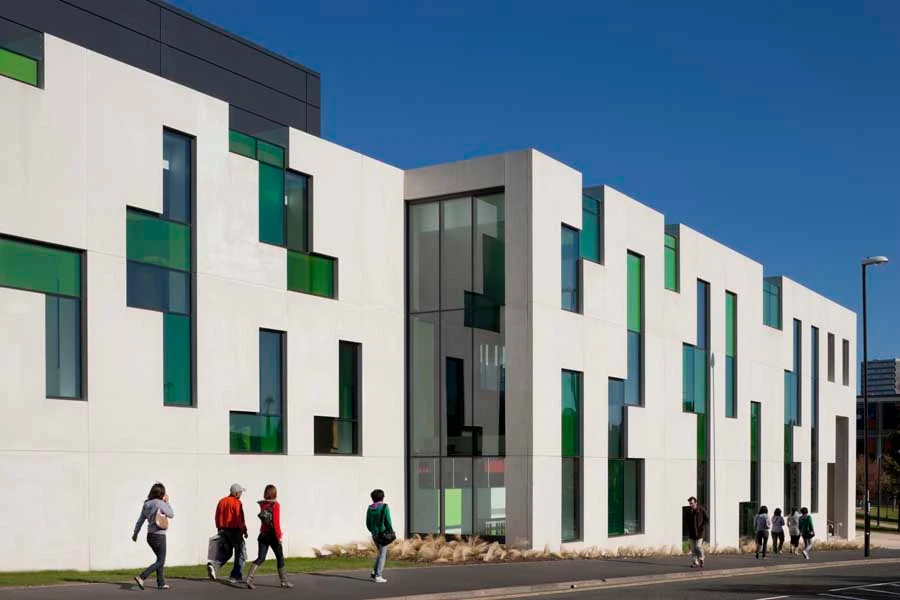
Removing the outdated steel windows and spandrel panels allowed the architects to introduce a crisp geometry of projecting bays, forming a sculptural rhythm across the main elevation. A carefully balanced composition of transparent, opaque and operable elements was used to meet the requirements of Building Regulations, enhance daylighting and provide a visually expressive new presence into the heart of the campus.
The architects ambition - to deliver a facade that feels both smooth and dynamic - was achieved through a flush external appearance, concealed opening units and an offset arrangement of transoms and mullions, introducing movement and depth to the building's character.
Facade Engineering and System Performance
The facade strategy for the CitySpace building was driven by a need to balance bold architectural expression with high-performance envelope design suitable for a modern university environment. With the original structure retained, the engineering challenge centred on delivering a lightweight, thermally efficient solution capable of integrating seamlessly with the 1960s concrete frame.
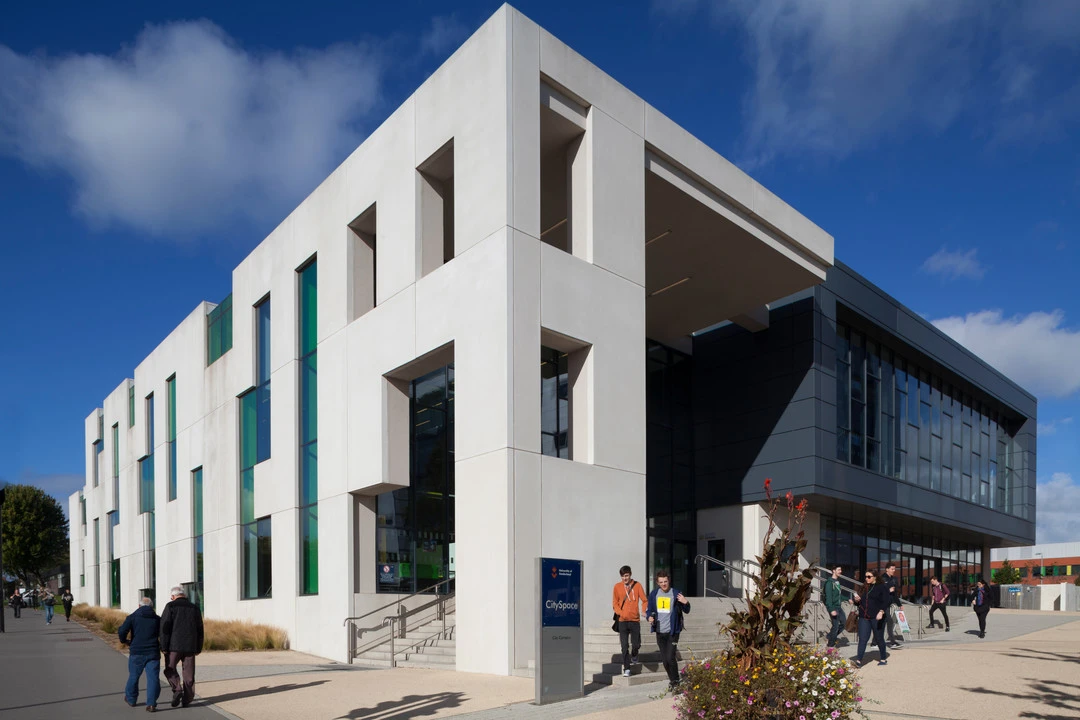
The resulting facade composition combines clean structural glazing, refined aluminium profiles and carefully positioned opening elements to enhance natural ventilation and provide a crisp, contemporary aesthetic. The projecting bay geometry demanding precise coordination between architect, fabricator and contractor to ensure structural integrity, airtightness and consistent sightlines across each elevation.
Beyond elevating the building's visual identity, the facade system delivers robust environmental performance - improving thermal insulation, maximising daylight penetration and supporting long-term durability. Together, these engineering considerations transform the envelope into a high-performing, future-ready asset that aligns with the university's operational and sustainability goals.
Sustainability, Circularity and Long-Term Value
The decision to refurbish rather than demolish reflects a sustainable and resource-efficient approach increasingly favoured within the higher-education sector. Retaining the concrete structure significantly reduces embodied carbon, while the introduction of high-performance TECHNAL aluminium systems ensures long-term durability, recyclability and reduced operational energy demand.
The facade upgrade supports:
Lower lifetime emissions through improved thermal performance
Enhanced natural light and indoor comfort
Reduced maintenance requirements thanks to the durability of aluminium
This approach strengthens the long-term value of the building, ensuring it remains a functional, efficient and appealing asset in the university's estate portfolio.
Impact on Campus and User Experience
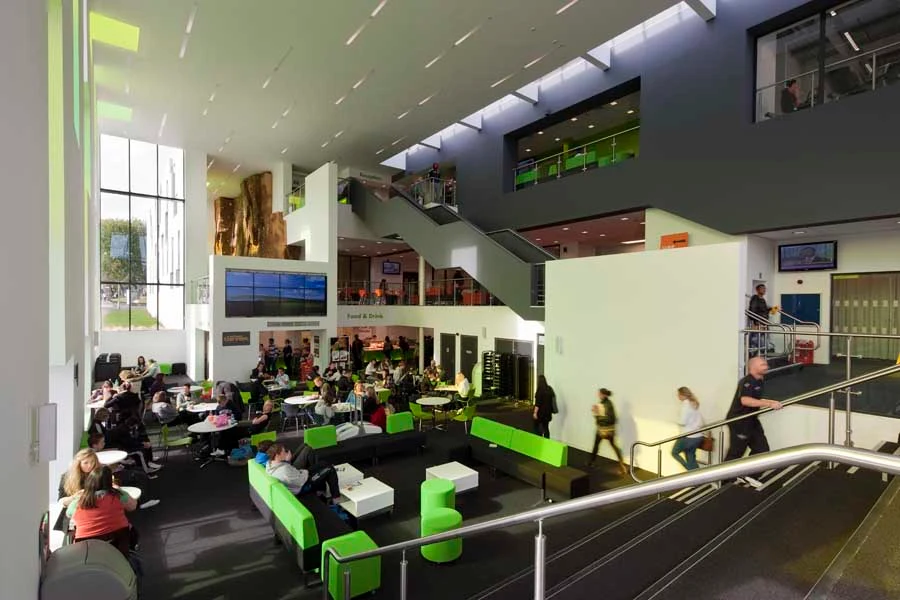
CitySpace now stands as a prominent marker of the university's identity - a vibrant, engaging building that supports student activity, wellbeing and community interaction. The revitalised facade improves visibility and wayfinding across the campus and creates a welcoming atmosphere for visitors.
Enhancements in ventilation, daylighting and comfort contribute to a positive user experience, while the geometry and articulation of the facade give the building a renewed civic presence.
Conclusion
The University of Sunderland's CitySpace refurbishment demonstrates how facade design can transform an aging building into a modern, high-performance and sustainable landmark. Through careful coordination between architect, contractor and fabricator, the project achieves technical excellence, improved environmental performance and a revitalised architectural identity.
It stands as a strong reference for those seeking to deliver impactful, sustainable refurbishments within university and public-sector estates across the UK and Ireland.
Want to see more?
You may also be interested in
Let's Discuss Your Next Project
From concept design to specification and delivery, our team can help you achieve your design, performance and sustainability goals.
Contact us