Dakota Manchester Airport, Manchester
A case study on lower carbon luxury in MIX-Manchester's new airport campus.
Luxury meets technical performance at Dakota Hotel Manchester Airport, where TECHNAL aluminium curtain walling and doors help deliver acoustic comfort, durability and lower embodied carbon within the MIX-Manchester Innovation campus.
- ArchitectKPP Architects
- Year2026
- PhotographerMatthew Nichol Photography
- FabricatorElite Aluminium Systems
- CityManchester
- CountryUnited Kingdom
The £54-million Dakota Hotel Manchester Airport brings a new level of comfort and design to the airport hotel experience. Located within the 60-acre MIX-Manchester innovation campus, the development combines luxury hospitality with demanding acoustic, thermal and environmental requirements. TECHNAL UK worked alongside Elite Aluminium Systems, GMI Construction Group and KPP Architects to deliver TENTAL 50 curtain walling and SOLEAL Next doors and framing, helping to create a quiet, durable and lower-carbon building beside one of the UK's busiest airports.
Changing Expectations
The image of airport hotels has long suffered from seeming merely utilitarian or downright uncomfortable. Many, despite very good levels of service, are past their best. Even with refurbishment (this is not a criticism of any individual property or chain) they can struggle to meet current expectations in terms of sustainability and wider environmental concerns. So, what better place to start than with a new build and modern design ethos?
And how, at an airport, to kill two birds with one stone (without harming any real birds of course) and create something exceedingly comfortable and while also scoring well for sustainability?
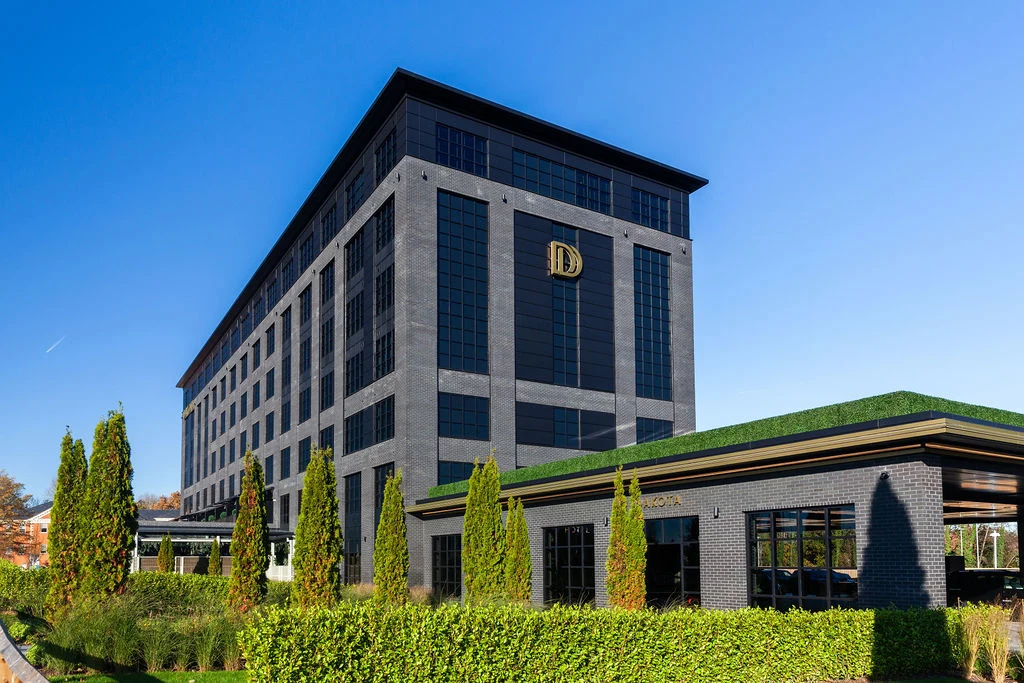
Dakota Manchester Airport fits this bill. It's owners call it the most luxurious airport hotel in the UK. As Matt Townley, Group Operations Director at Dakota Hotels Ltd, describes it, the hotel is the guests' "destination before their destination." In essence, this is a high-quality hotel which happens to be at an airport - quite different to a regulation airport hotel.
Location, Location, Location
The hotel has been a substantial investment, with a total cost of approximately £54 million. Within that price tag it meets four requirements. The interior, especially bedrooms, must be quiet, despite proximity to the airport. The materials used had to be suitable for the surrounding sustainability driven campus, and the project as a whole had to leave a biodiversity impact at least 10% healthier than the original site. Additionally, there was a specification for low maintenance, especially for exterior surfaces.
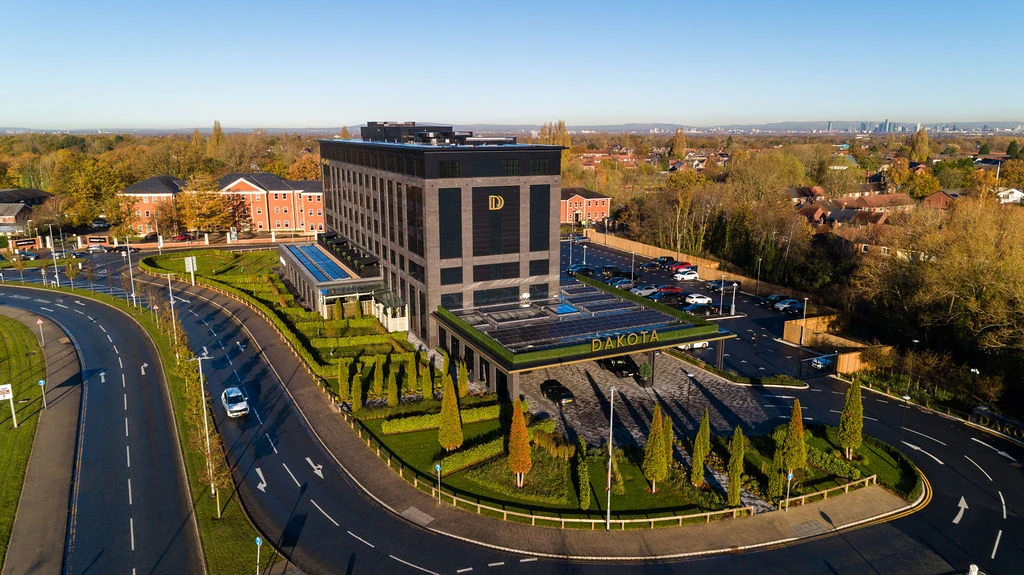
Dakota Manchester Airport is within the MIX-Manchester campus and close to the airport access roads. MIX-Manchester is a 60-acre, manufacturing, innovation and science campus. It supports life sciences, advanced materials development, healthcare innovation, digital and tech businesses, and clean technology. There are leisure facilities and public green spaces onsite too. Additionally, any development within the campus needs to comply with ambitious environmental requirements.
Manchester airport is one of the busiest in the UK, so construction traffic and crane use had to be carefully organised to minimise disruption to airport operations and the public. Scheduling and precise time slots for each phase of construction became both a challenge and a fine art.
Noise Mitigation
Interior acoustic targets were for 30 to 35dB (consistent with BS 8233) compared to an average airport perimeter noise level at plane approach or departure of 60 - 75dB. Naturally, acoustic control is effective only when windows are closed, so this also required co-ordination with HVAC design.
For TECHNAL, this was a good match. TENTAL 50 Curtain Walling - used for the frontage and main elevations - provides a weighted sound reduction index (Rw) of 43 - 45 dB. The accompanying SOLEAL Next door and framing systems are tested to an Rw of 43 - 44 dB.
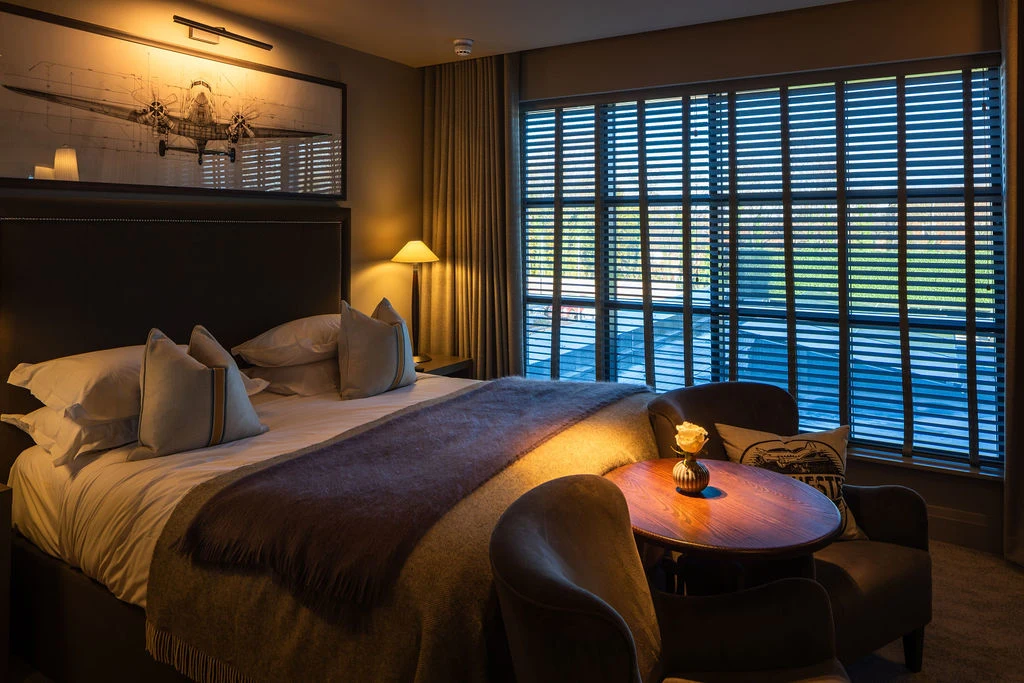
These figures on their own demonstrate measurable suitability on this project. However, another element is worth considering: because the impact of sound energy is logarithmis, a 10 dB reduction has the effect of halving ambient noise levels. A reduction of 40 or more dB thus has a dramatically positive impact on perceived reduction of disturbance.
Sustaining Sustainability
Compliance with thermal and noise insulation requirements was an important part of the design, but so was longevity and sustainability. In terms of curtain walling and doors, the exterior finish for these TECHNAL products included a sleek RAL 7016 palette, Class 1 paints at 60 Microns, with a 25 year paint warranty.
And the aluminium itself is Hydro CIRCAL® 75R. This is aluminium containing at least 75% recycled post-consumer scrap, made up of window, door and facade frames from demolished buildings and refurbishment projects, which is therefore also material diverted from landfill.
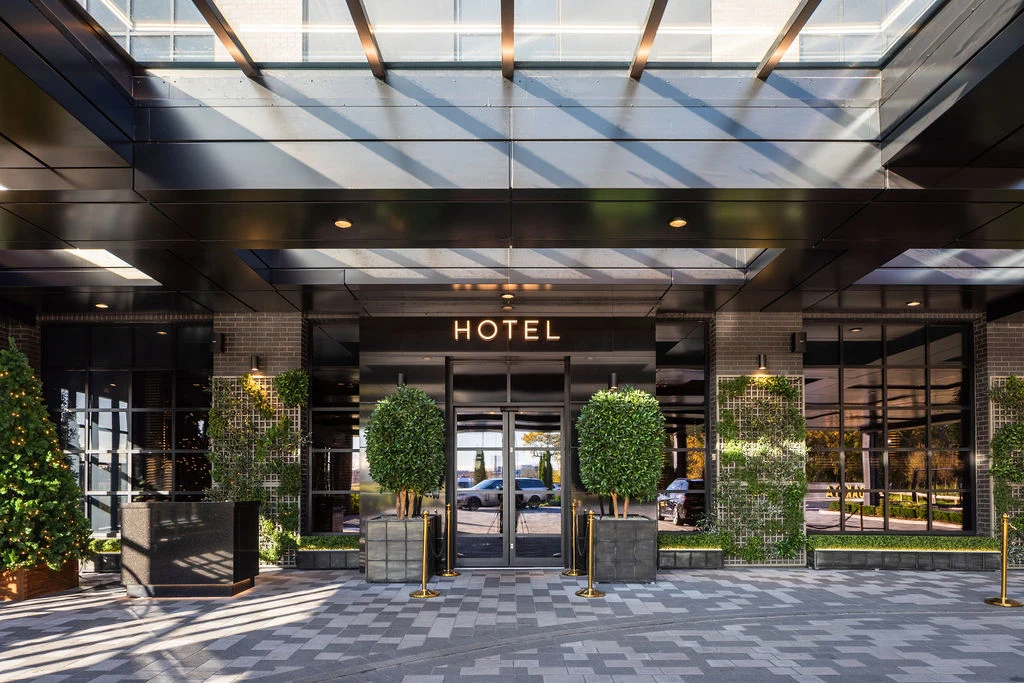
Hydro CIRCAL® 75R has an embodied carbon level of 1.9 CO2e per kilogram of aluminium, compared to the average of 6.6 Co2e per kg for primary aluminium in produced in Europe. As well as in the EU, Hydro CIRCAL® is produced in the UK at Hydro's Wrexham plant in North Wales.
These environmental improvements bring benefits to the Dakota Hotel in its own right. However, it is also a good fit for MIX-Manchester, MIX stands for Manufacturing Innovation Exchanfe, and the intended criteria include low carbon operation and clean technology - recycled aluminium in high performance construction products is exactly the right fit.
Collaboration is Key
Most successful projects are the result of collaboration in some form. The Dakota Manchester Airport was no exception. The main contractor, GMI Construction Group, knew the client well, having worked with them on four previous Dakota Hotels.
Similarly, fabricators Elite Aluminium Systems Ltd and TECHNAL UK have worked together previously, including on the flagship Oxford Technology Park project. Elite's aluminium designer, Lee Read, worked closely with Matt Lazenby, Technical Operations Manager at TECHNAL.
There were obvious challenges in the design phase, but those are exactly that experts thrive on and where the stakeholders have plenty of experience. Logistics were sensitive rather than difficult, such as with scheduling access to avoid blocking key roads while also avoiding construction delays.
The GMI team, led by Project Manager James Moore, were exceptional throughout. Together with TECHNAL UK and our team at Elite Aluminium Systems, everyone worked tirelessly and collaboratively to keep the project moving and deliver what was required. It was a great example of what can be achieved when the whole project team pulls in the same direction.
The combination of these strict requirements could have been the breeding ground for long interruptions. However, collaboration and shared understanding of processes and priorities ensured that potential obstacles were foreseen and overcome. And if proof is required, next time you're in the area, why not explore MIX-Manchester and call into Dakota Manchester Airport while you're there?
Planning your Next Project?
Explore TECHNAL's aluminium curtain walling and facade systems, designed to help architects, specifiers and contractors balance design intent with demanding performance requirements.
Explore our facade solutions
Want to see more?
You may also be interested in
Let's Discuss Your Next Project
From concept design to specification and delivery, our team can help you achieve your design, performance and sustainability goals.
Contact us