An Inclusive and Ultra-Efficient Bioclimatic Building
How Torre Baró sets a benchmark for energy-efficient, inclusive housing design
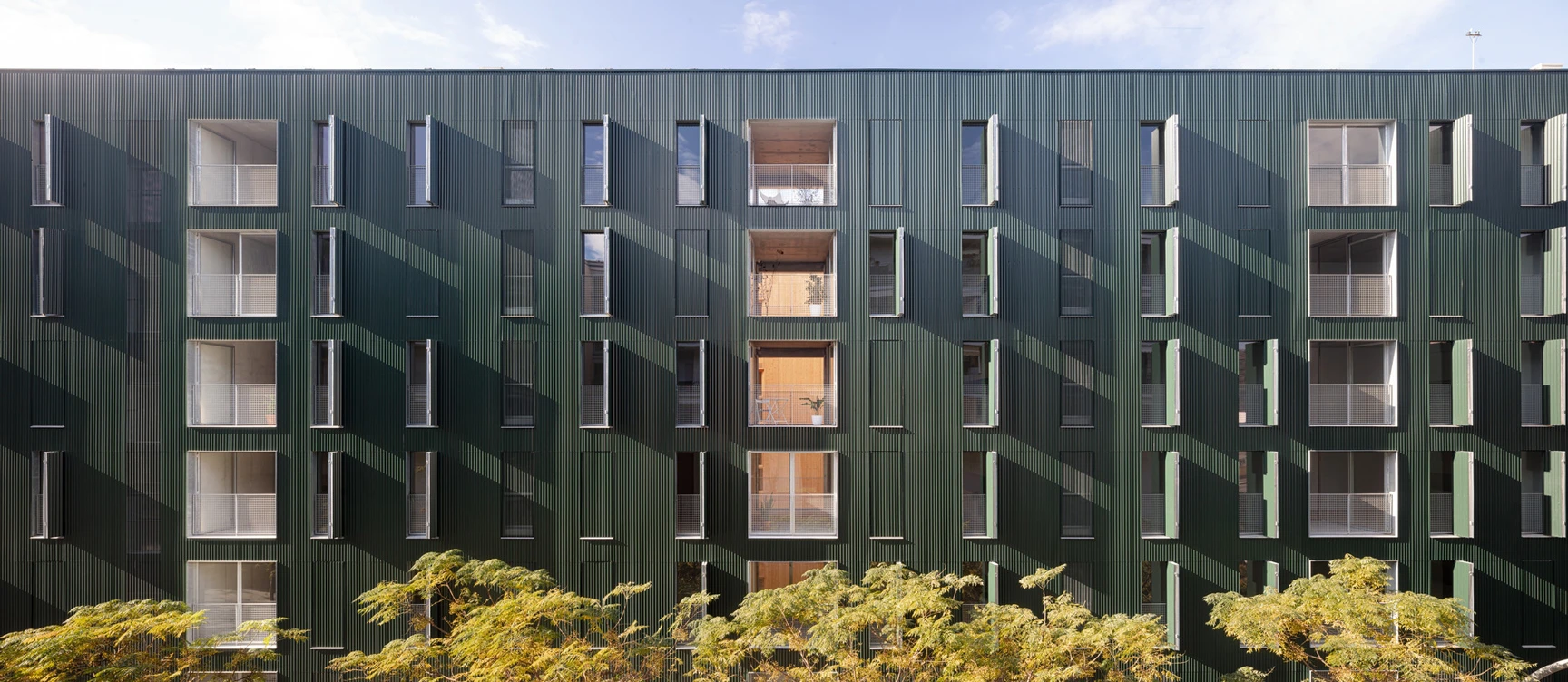
On the edge of Parc de Collserola in Barcelona, the Torre Baró development demonstrates how bioclimatic architecture can transform the delivery of social housing design. Created by DATAAE, Maira Arquitectes, Narch Architectes, this 47-home scheme combines passive housing design, energy efficient buildings, and advanced aluminium glazing to create a model for low-carbon housing that is practical and scalable.
Set within a complex urban and natural landscape, the project sits at the intersection of contrasting environments - between informal hillside dwellings and more structured urban housing. The architects described this condition as a meeting point between landscape and infrastructure, where the building adopts an intermediate scale to mediate between both contexts.
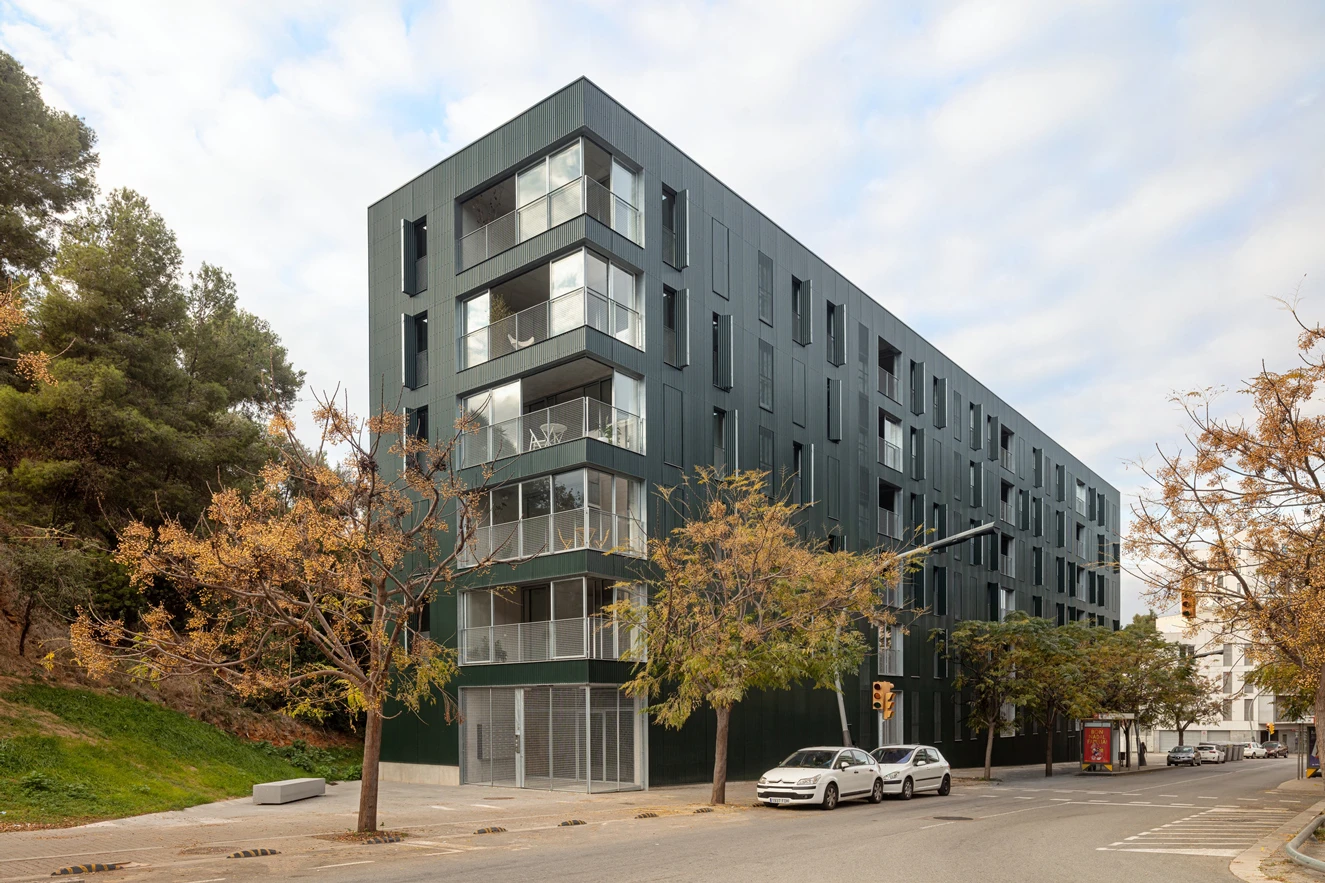
For construction professionals across the UK and Ireland, where the drive towards net zero social housing, Future Homes Standard compliance, and reduced whole-life carbon is accelerating, Torre Baró provides a compelling case study - illustrating how sustainable construction materials and facade systems such as the TECHNAL SOLEAL Sliding system can deliver measurable outcomes.
Reinterpreting housing through climate and context
A key principle underpinning the scheme is the use of intermediate spaces to bridge the gap between public and private realms. Rather than creating a hard boundary between street and home, the design introduces a sequence of transitional environments that improve environmental performance and resident experience.
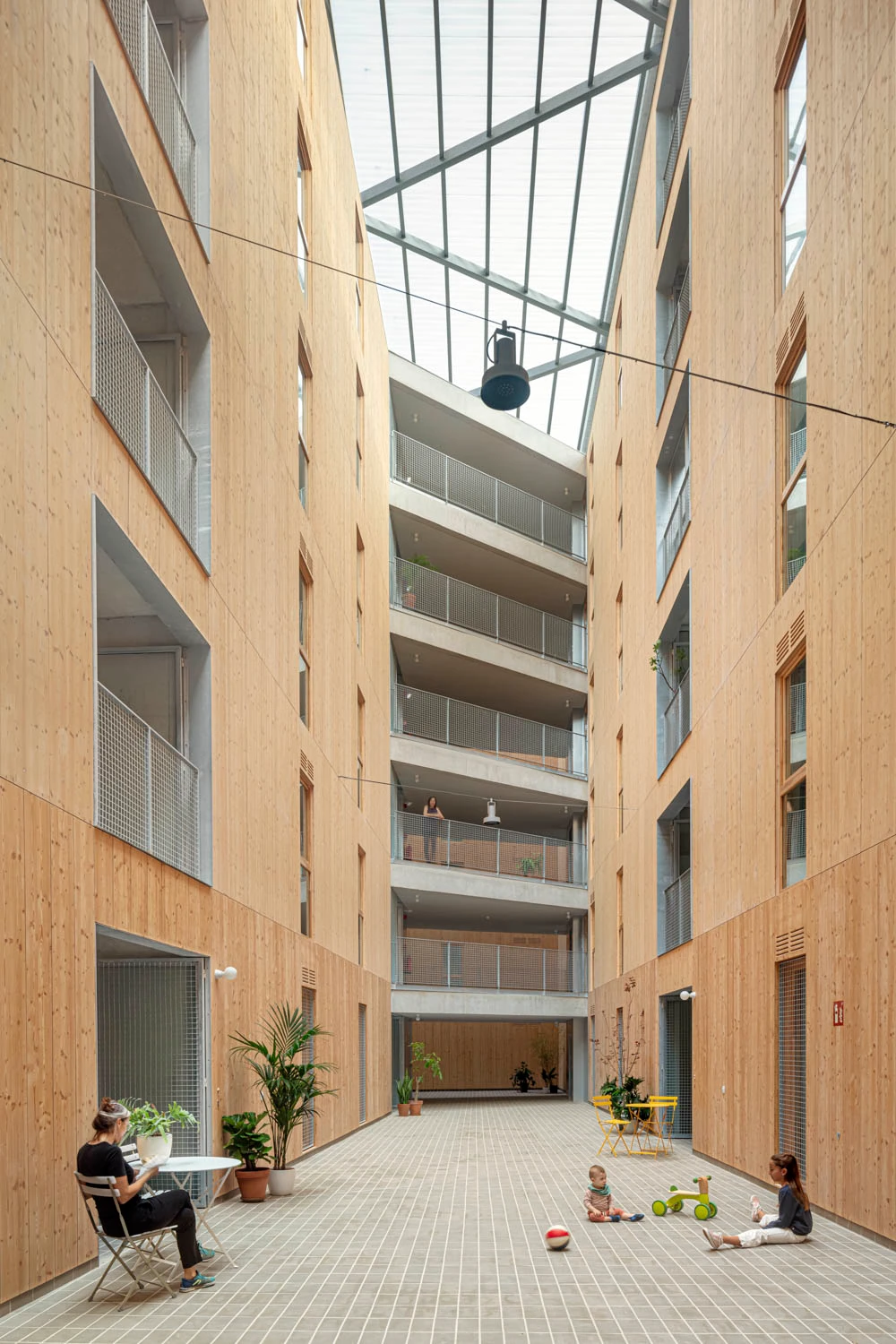
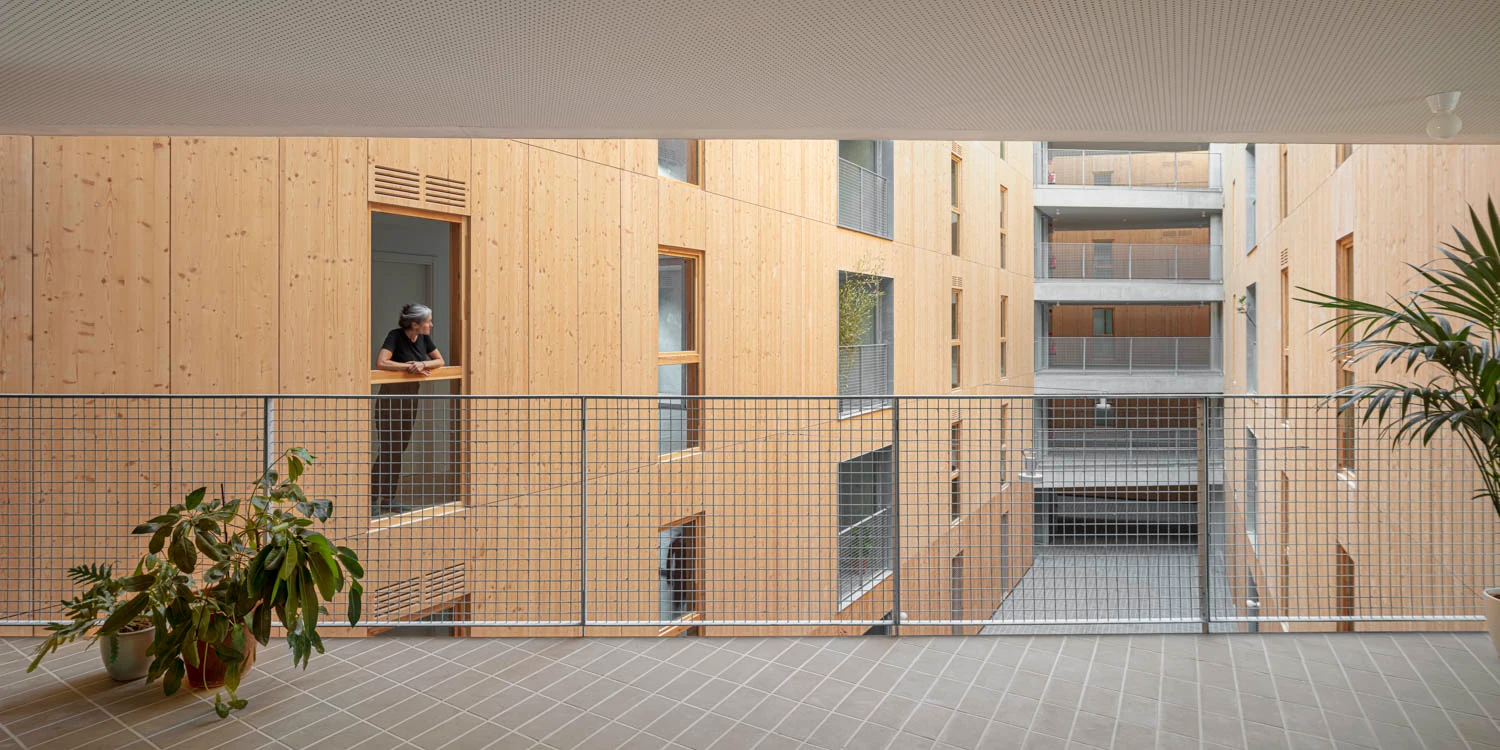
The central atrium becomes both a space for interaction and an energy-efficient mechanism for the entire complex.
The building itself is conceived as a shallow, continuous perimeter of courtyard dwellings, wrapped around a central atrium. This configuration is spatially efficient and crucially, improves how the building performs environmentally.
At the centre, the bioclimatic atrium operates as a social condenser and environmental regulator. The architects deliberately designed this space to be adaptable: it can be open, closed and protected from solar gain, functioning as a greenhouse in winter and a highly ventilated shaded structure in summer.
This allows the building's form to respond directly to environmental conditions, creating what the design team describe as a "thermally favourable space" that enhances energy exchange with the apartments and reduces ventilation losses.
SOLEAL Sliding Systems: Supporting passive design through facade performance
While the architectural strategy defines the project's intent, its success relies on the detailed specification of the building envelope - particularly in the use of SOLEAL Sliding systems, through the use of the products as door and window applications.
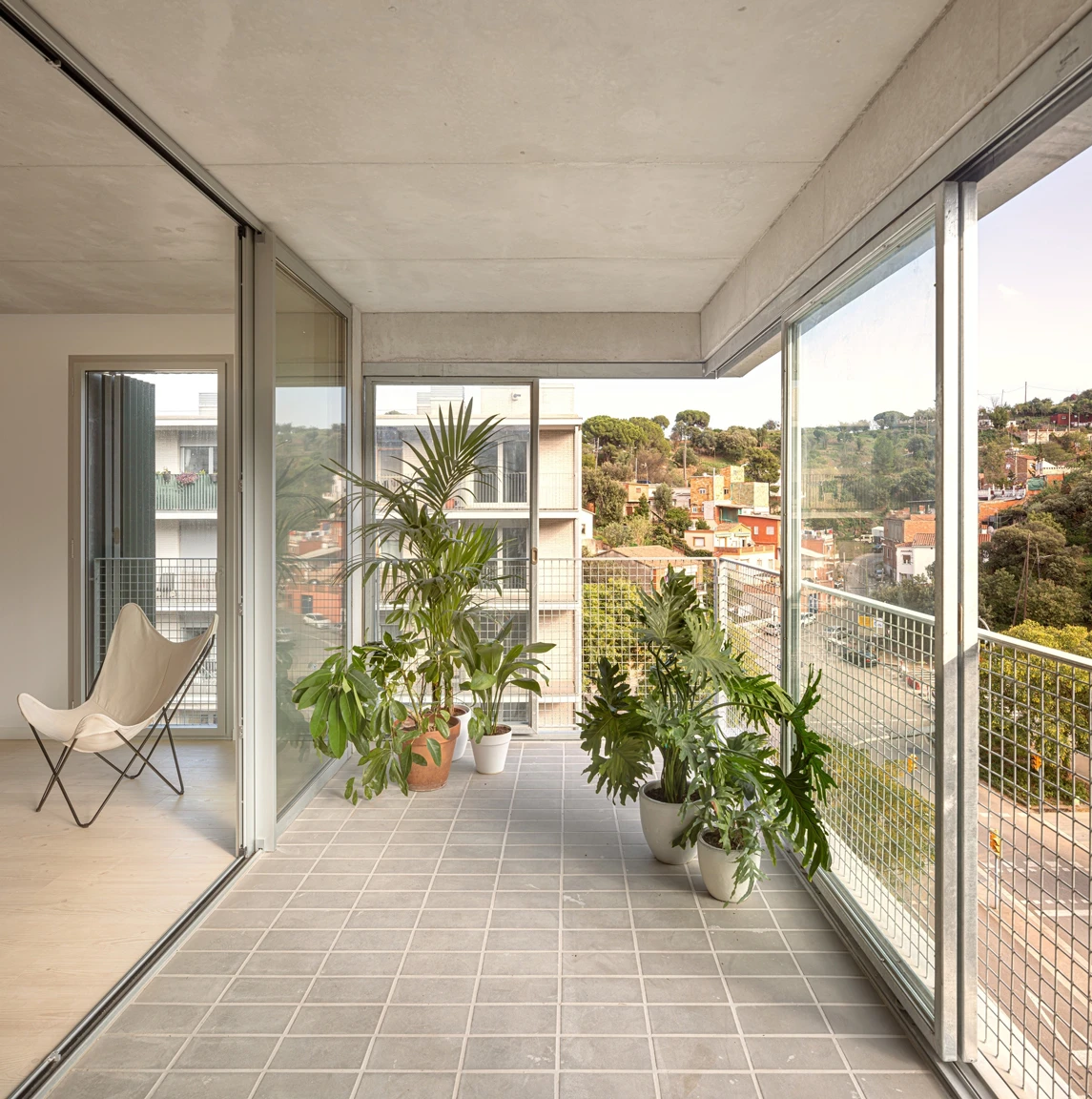
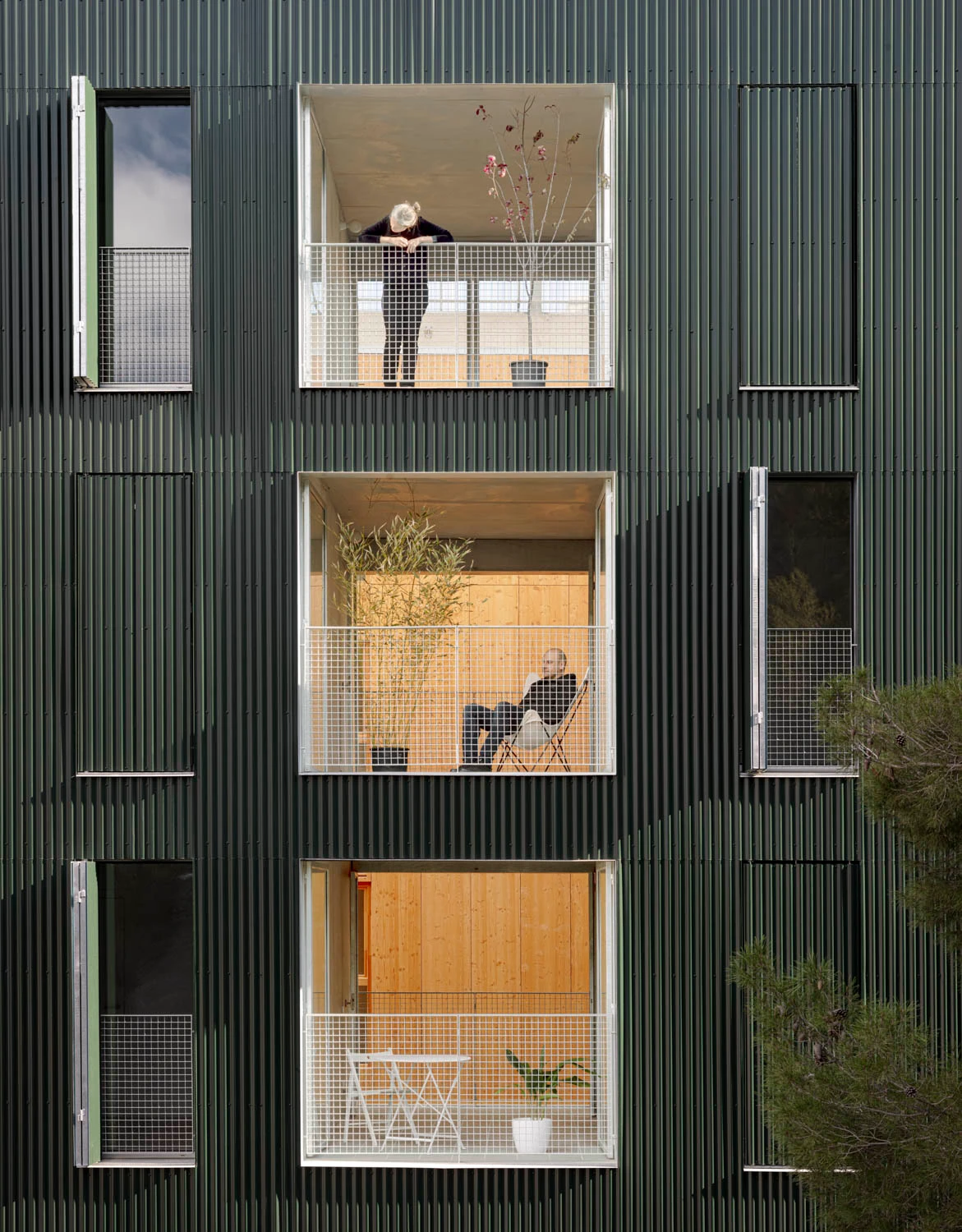
Each home incorporates an intermediate terrace-gallery that functions as a passive utilisation space.
Each home integrates a terrace-gallery, a defining feature of the building's typology. These spaces act as private environmental buffers, extending the interior into an adaptable zone that can be opened or enclosed depending on seasonal needs.
According to the architects, every apartment incorporates this intermediate gallery as a passive utilisation space, contributing directly to the building's thermal performance.
This is where SOLEAL plays a critical role.
In winter, the glazing enables the terrace to function as a heat-capturing enclosure, generating thermal gains through a greenhouse-like effect and reducing the need for heating. In summer, the same space can be fully opened, enabling cross ventilation and supporting passive cooling and natural ventilation throughout the building.
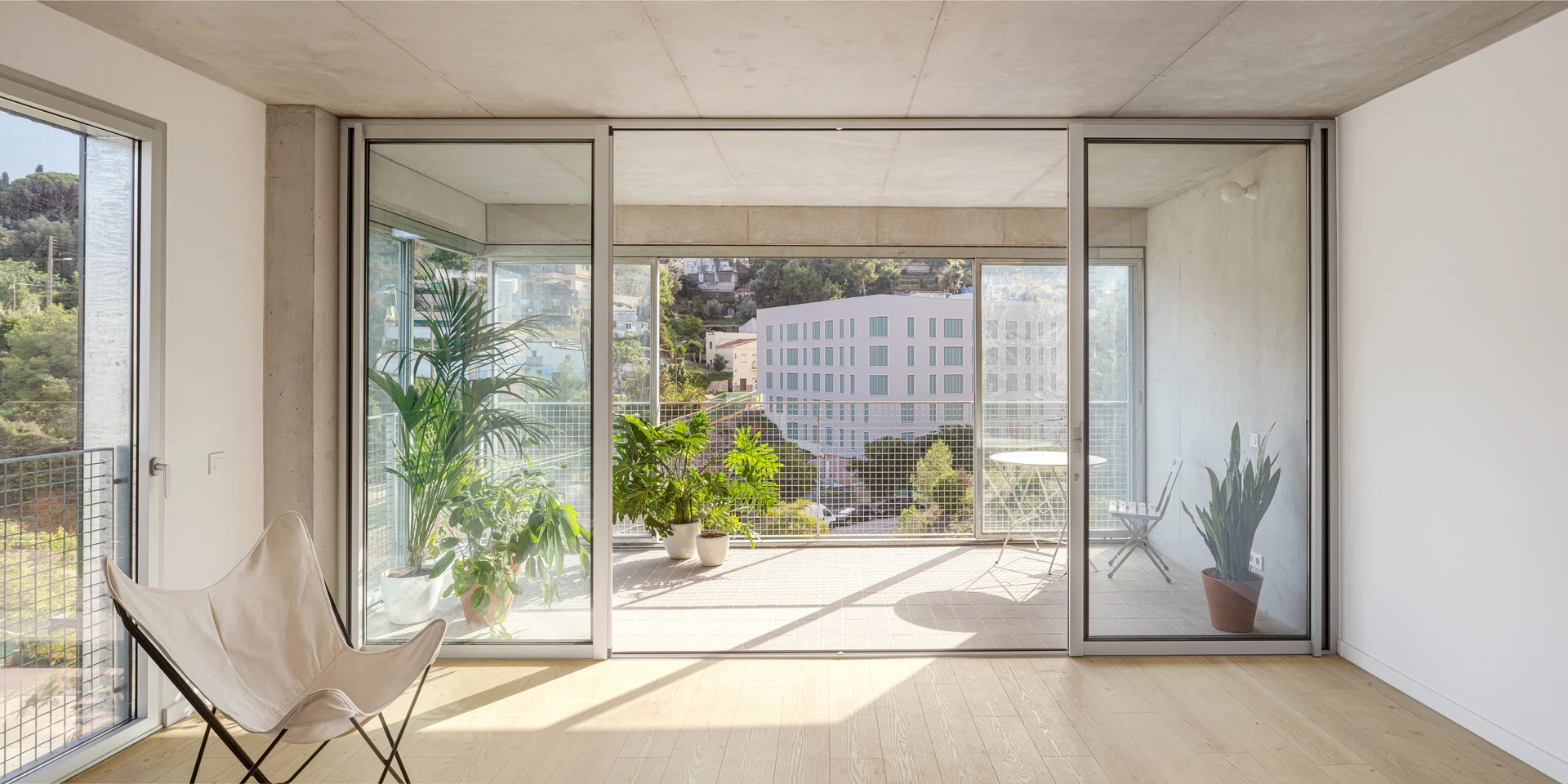
In summer, these spaces support cross ventilation, while in winter they become heat-capturing zones through a greenhouse-like effect.
For specifiers exploring energy efficient facade systems, this illustrates how high-performance glazing can actively contribute to a building's energy strategy - far beyond basic enclosure.
The SOLEAL system also supports daylight optimisation in housing design, with slimline aluminium profiles maximising natural light while maintaining durability and performance in high-density residential applications.
Responding to energy poverty through design
A notable driver behind the project is the need to address energy poverty, a challenge relevant across the UK and Ireland. The architects explicitly set out to design a building that could operate with almost zero energy consumption and without dependence on air conditioning systems, instead relying on passive principles and renewable energy generation.
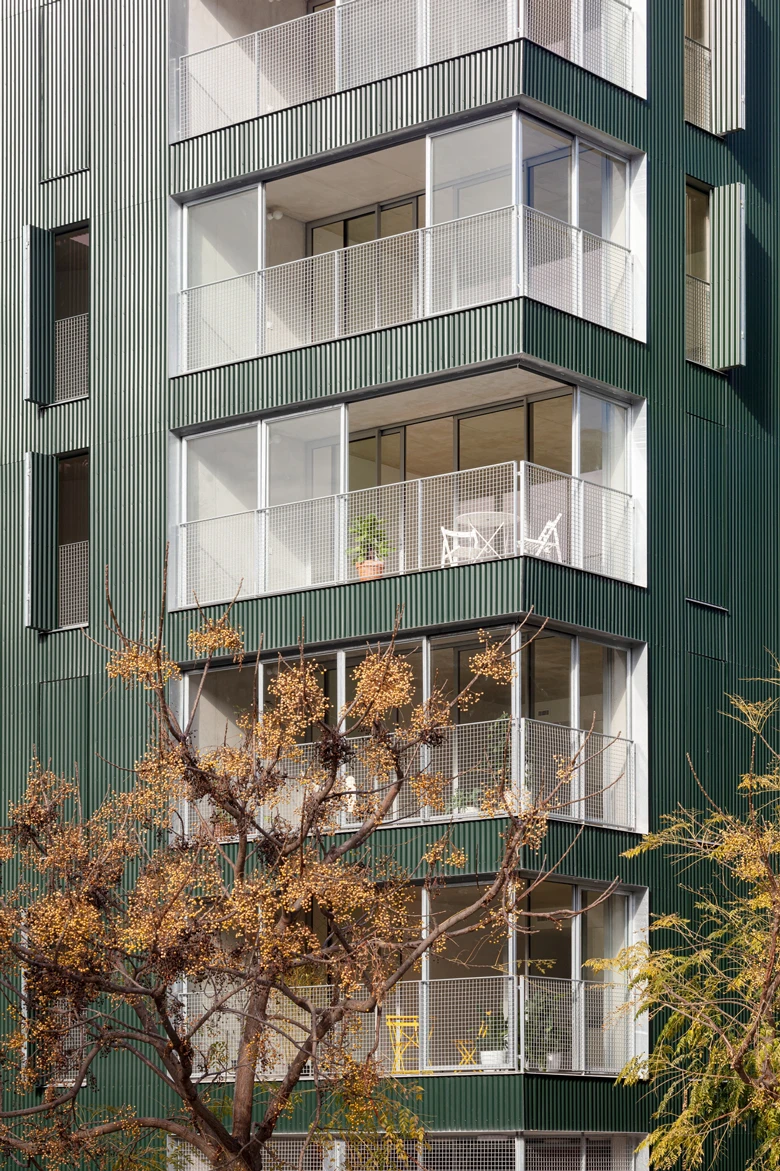
This ambition is realised through a combination of:
The bioclimatic atrium acting as a thermal regulator
Intermediate terrace-gallleries supporting passive heating and cooling
High-performance glazing through the use of SOLEAL sliding systems
Photovoltaic panels delivering renewable energy
For those asking how to design low energy social housing without HVAC, Torre Baró provides a clear and proven response.
Low embodied carbon through Hydro CIRCAL® 75R aluminium
In addition to operational energy, the project addresses embodied carbon - a critical consideration for many projects working towards net zero targets.
All TECHNAL aluminium building systems are manufactured with Hydro CIRCAL® aluminium, containing at least 75% post-consumer recycled material. This delivers an 80% reduction in embodied carbon when compared to primary aluminium in use in Europe, supporting UK and Ireland low carbon building material strategies and enabling alignment with whole-life carbon assessments.
As aluminium continues to be widely specified in residential developments, the use of low embodied carbon aluminiumm demonstrates how material choices can contribute meaningfully to sustainability without compromising performance, durability or lifespan.
Housing typology designed for light, flexibility and wellbeing
At the typological level, the building adopts a simple but highly effective strategy: all homes are designed as through-units, with rooms arranged along the facade to maximise natural light and views.
This approach ensures that every space benefits from ventilation and daylight, reinforcing the environmental performance goals and occupant wellbeing.
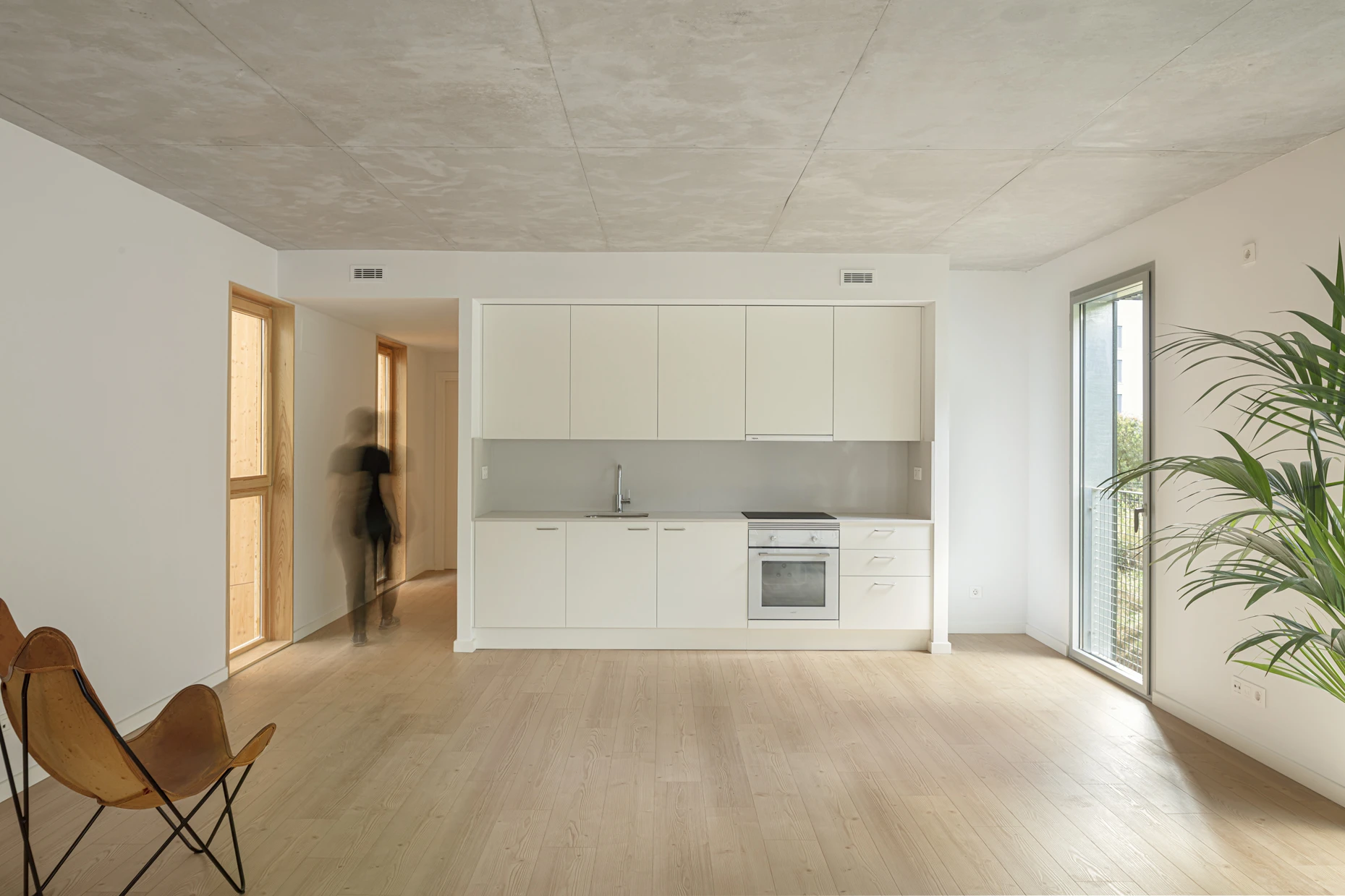
All romms are arranged along the facade to ensure natural light and views for every living space.
The inclusion of adaptable, consistently sized rooms supports long-term flexibility, enabling residents to adjust living arrangements as needs evolve - an increasingly important consideration in sustainable urban housing solutions.
A scalable model for UK and Ireland construction
Torre Baró offers valuable lessons for the UK and Ireland construction sector, particularly as the industry transitions towards net zero housing delivery.
The project demonstrates that:
Bioclimatic architecture can significantly reduce reliance on mechanical systems
Intermediate spaces such as terraces and atria are critical to passive design success
High-performance glazing systems are central to achieving energy efficiency
Recycled aluminium systems, like those from TECHNAL made with Hydro CIRCAL®, enable substantial embodied carbon reductions
Perhaps most importantly, it shows that social housing design can deliver high levels of environmental performance while remaining deeply focused on human experience.
TECHNAL and the future of energy-efficient housing
Through the integration of TECHNAL aluminium systems, the Torre Baró development demonstrates how facade design can directly influence building performance - from thermal regulation to user comfort and carbon reduction.
By combining TECHNAL SOLEAL sliding doors and windows with bioclimatic design principles and low embodied carbon materials, the project provides a blueprint for delivering energy efficient buildings suited to the demands of modern construction.
Want to see more?
You may also be interested in
Let's Discuss Your Next Project
From concept design to specification and delivery, our team can help you achieve your design, performance and sustainability goals.
Contact us