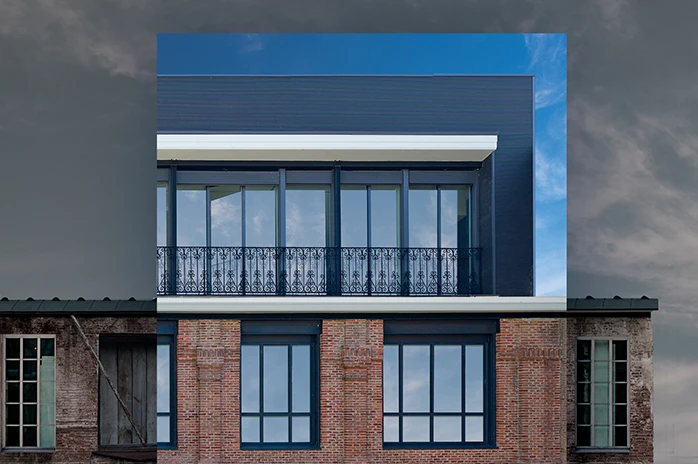
Why Circular Renovation is a Strategic Imperative for the UK and Ireland Construction Sector
Circularity isn't a trend, it's the new foundation of construction
The construction industry across the UK and Ireland is standing at a crossroads. The buildings we design, refurbish, and deliver in the coming decade will either accelerate our path to net zero, or lock in decades of carbon-intensive performance.
And here's the reality - the majority of our future building stock is already standing.
According to EU and national government data, 85 - 95% of the buildings we will use in 2050 already exist today. New build, while important, will never be enough on its own to meet the UK and Ireland's climate commitments. That means renovation, done the right way, is no longer just a nice to have. It's the most powerful lever we have for deep, measurable decarbonisation.
The Regulatory Squeeze
Construction professionals in the UK and Ireland are already feeling the tightening loop of environmental regulation:
Minimum Energy Efficiency Standards (MEES) in the UK are pushing landlords to raise EPC ratings to E or above for all rented commercial buildings, with talk of tightening to C or higher in the 2030s. In Ireland, Building Energy Rating (BER) regulations are being strengthened, and public procurement increasingly demands high-performance upgrades.
The Building Regulation Part L changes in the UK, and Technical Guidance Document L in Ireland, have increased performance requirements for fabric and services, closing loopholes for inefficient refurbishment.
Public sector requirements in both markets no prioritise low-carbon and circular outcomes, making compliance a tender-winning factor.
In Europe, the Energy Performance of Buildings Directive (EPBD) is targeting a 20-22% reduction in primary energy use for residential buildings by 2035 and mandates major renovations for 26% of non-residential buildings by 2033. These targets matter for Ireland directly and influence UK projects through supply chain, investor, and multinational occupier demands.
The message is clear: future-proofing assets through sustainable circular renovation isn't just about ethics, it's about survival in a market where non-compliant buildings risk becoming stranded assets.
From Cost Centre to Value Driver
It wasn't long ago that building renovation was purely frames as a cost to be managed. Today, it's increasingly seen as a value multiplier. High-performance retrofits can:
Preserve and enhance asset value by ensuring compliance with the most stringent energy and carbon saving standards.
Unlock green financing through alignment with EU taxonomy criteria, Ireland's Climate Action Plan, and UK Sustainable Finance Initiatives.
Improve resale and rental potential, particularly for Grade A office space and prime retail, where occupiers demand comfort, natural daylight, and low running costs.
A building with poor energy performance is no longer of interest. If it meets the highest standards, it's immediately more attractive.
Circularity: The Game-Changer
Circular renovation goes beyond upgrading performance. It's about rethinking the entire process to reduce waste, reuse materials, and anticipate the building's future end-of-life. That means:
Frugal renovation - only replacing what's necessary while retaining structurally sound elements.
Using recycled and recyclable materials, such as Hydro CIRCAL® aluminium, with at least 75% recycled post-consumer scrap, and a carbon footprint around 85% lower than the global average for primary aluminium.
Designing for disassembly, so components can be easily removed, sorted, and reused without costly demolition.
This is not just sustainability for sustainability's sake. It's operational efficiency, risk management, and competitive advantage rolled into one.
The UK and Ireland Opportunity
The UK and Ireland have unique drivers that make circular renovation especially urgent:
Urban mining potential - London, Manchester, Birmingham, Dublin, and Cork all have extensive stocks of mid-century commercial and residential buildings rich in recoverable aluminium, steel and glazing.
Skills and supply chain readiness - Across both markets, the fenestration and facade industries already have mature recycling and remanufacturing capabilities.
Market demand - Corporate occupiers in the UK and Ireland are under mounting pressure to report Scope 3 emissions, making low-carbon retrofits a compelling proposition for landlords seeking to retain and attract tenants.
The Bottom Line
The shift from linear to circular thinking is no longer a theory. It's here, backed by policy in both the UK and Ireland, and it's opening clear commercial opportunities. Construction professionals who embrace it now by integrating decarbonisation into their refurbishment strategies will be better placed to win tenders, attract investment, and deliver buildings that remain valuable for decades.
Because in this market, the question is no longer "Can we afford to?"
It's "Can we afford not to?"
Want to see more?
Let's Discuss Your Next Project
From concept design to specification and delivery, our team can help you achieve your design, performance and sustainability goals.
Contact us