Designing for a Circular Economy
How to Specify Lower Carbon Aluminium with Confidence
Specifying aluminium isn't as simple as choosing a product with "recycled content". Behind the labels lie critical distinctions - and for architects, contractors, and developers designing for low-carbon outcomes, these differences matter.
In a world increasingly shaped by ESG criteria, carbon benchmarking, and green building certifications like LEED and BREEAM, clarity around recycled aluminium is essential. So how do you know if you're really specifying a truly recycled aluminium system?
Let's break it down.
Aluminium: Built for the Circular Economy
Aluminium is often hailed as the poster material for circular construction. Why? Because it retains its properties indefinitely when recycled - and requires just 5% of the energy needed to produce virgin aluminium. But not all recycled aluminium is created equal.
There's a major difference between pre-consumer and post-consumer aluminium content. And it's post-consumer aluminium - metal that's been used in real-life applications and recovered at end-of-life - that drives meaningful carbon savings.
Understanding the Terminology
Pre-consumer (or process) scrap
This is aluminium waste from the manufacturing process. Think offcuts or extrusion trimmings that never left the factory floor. It's clean, easy to recycle, and energy-efficient - but it hasn't actually contributed to circular reuse.
Post-consumer (or end-of-life) scrap
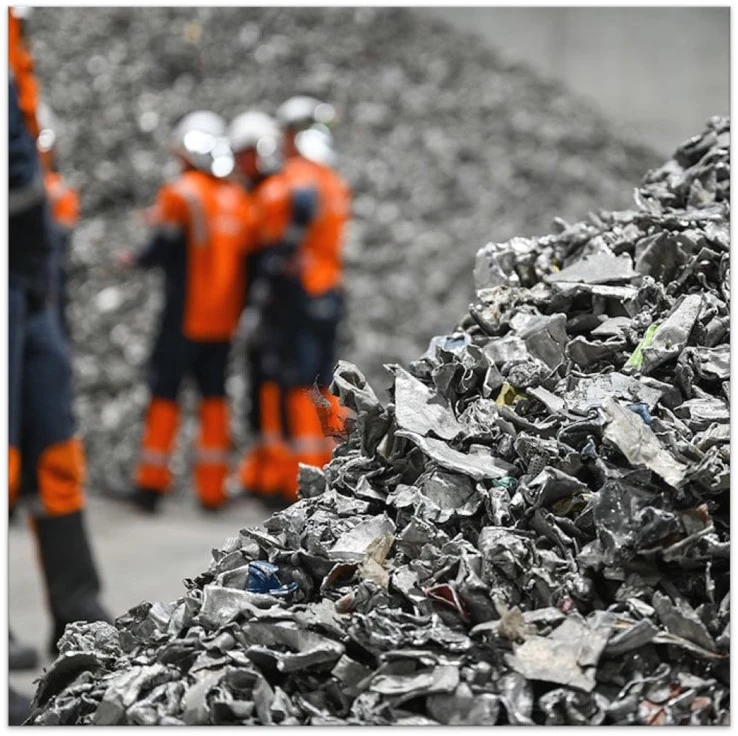
This is aluminium recovered from real-world use. Window frames removed from building demolition. Curtain walling dismantled from old facades. This metal has completed its service life, been processed, separated, cleaned, shredded, and remelted into new building products. It's this cycle that lowers embodied carbon and prevents landfill.
Post-consumer Aluminium Matters
The more post-consumer aluminium in a product, the lower its carbon footprint. But high post-consumer content is harder to achieve. The metal must be sorted, stripped of coatings, separated from thermal breaks, shredded, and analysed - often with X-ray scanning to identify alloy types. That kind of effort makes a difference.
TECHNAL's parent company, Norsk Hydro, developed Hydro CIRCAL® to push that boundary. Hydro CIRCAL® 75R contains at least 75% post-consumer recycled content, certified by third parties and available as standard for all products in the UK. It delivers a DNV-GL verified carbon footprint of just 1.9kg CO² per kg of aluminium - around 85% lower than the global average for primary aluminium.
Industry Benchmarking: Why Disclosure Matters
Some manufacturers promote "recycled content" levels above 90% - but without distinguishing between pre- and post-consumer inputs. That risks misleading specifiers and undermining progress toward net-zero goals. Full material traceability and independent verification are key.
At TECHNAL, we provide transparency. All UK systems, including windows, doors, sliding systems, and curtain walling are available in Hydro CIRCAL® 75R as standard. For select projects, products can be supplied in Hydro CIRCAL® 100R - which is made with 100% recycled post-consumer scrap and is independently verified to contain just 0.5kg of CO² per kg of aluminium.
What to Look for Beyond Recycled Content
Third Party Verification
Look for certifications by bodies such as DNV-GL, or cradle-to-cradle credentials that confirm lifecycle accountability.
Environmental Product Declarations (EPDs)
These outline embodied carbon, resource use, and end-of-life performance, giving you transparent comparisons between systems. We are also able to generate project-specific EPD's via our software TechDesign.
Green Building Standard Alignment
Products aligned with BREEAM, LEED and other green building certifications are more likely to meet public procurement requirements and investor ESG standards.
Material Purity
Ensure different alloy types are not mixed in the recycling process. Maintaining alloy integrity is essential for consistent mechanical performance.
Future-Ready Aluminium.
Specifying lower carbon aluminium isn't about marketing claims. It's about asking the right questions, demanding credible data, and selecting partners who are investing in genuine circular solutions.
At TECHNAL, we're not just talking about sustainability. We're delivering it - through fully traceable, third-party verified aluminium systems built for circularity and low-carbon design.
Let's build the future together. One recycled window at a time.
Want to see more?
You may also be interested in
Let's Discuss Your Next Project
From concept design to specification and delivery, our team can help you achieve your design, performance and sustainability goals.
Contact us