Curtain Wall Window System
Discover curtain wall window system from TECHNAL Middle East. Global leaders in high-end design and innovative aluminium profiles and solutions.
A curtain wall window system is an engineered solution that integrates operable windows within a glazed curtain wall.
These systems are commonly used in commercial and high-rise buildings where large glazed façades are required without compromising design and functionality.
One of the key reasons for integrating windows into a curtain wall system is ventilation and improved airflow. Operable windows allow controlled natural ventilation, helping regulate internal comfort while supporting energy-efficient building operation.
It is important that windows are incorporated as part of a specific curtain wall window system, rather than added as isolated elements. Proper system integration is essential to maintain the structural integrity, air-tightness, and overall performance of the curtain wall system.
TECHNAL is a leading provider of curtain wall system solutions, offering high-performance aluminium facadde systems engineered to integrate windows seamlessly while meeting demanding structural and environmental requirements.
What is a curtain wall window system?
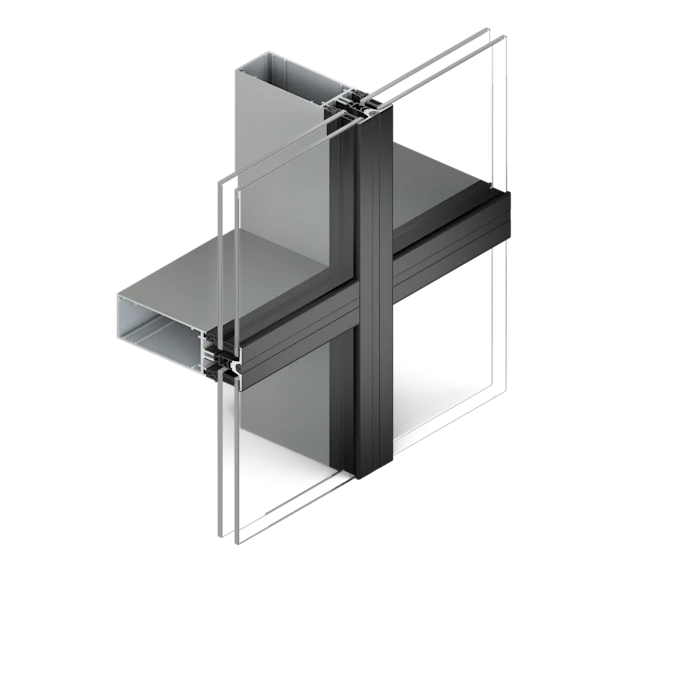
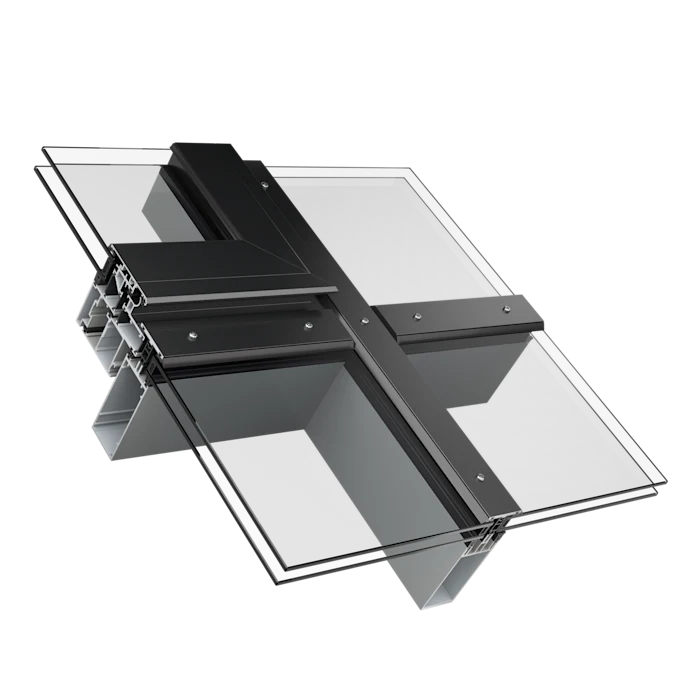
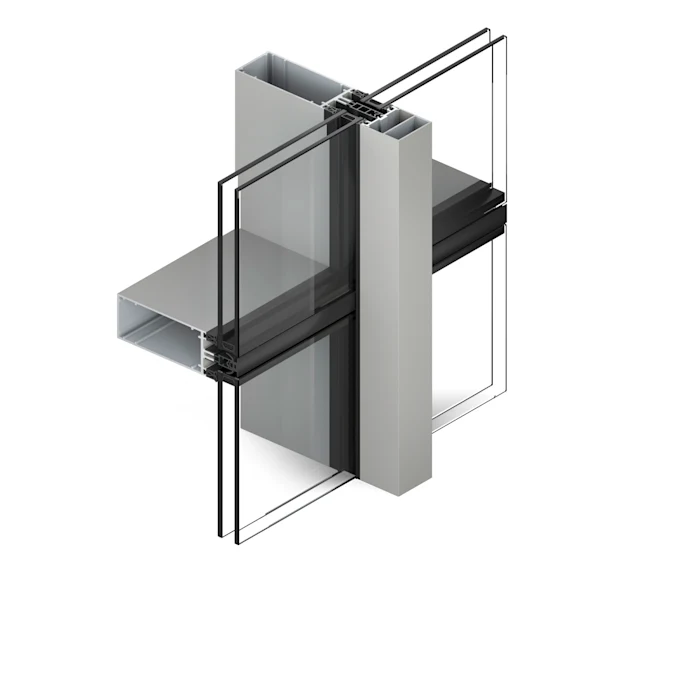
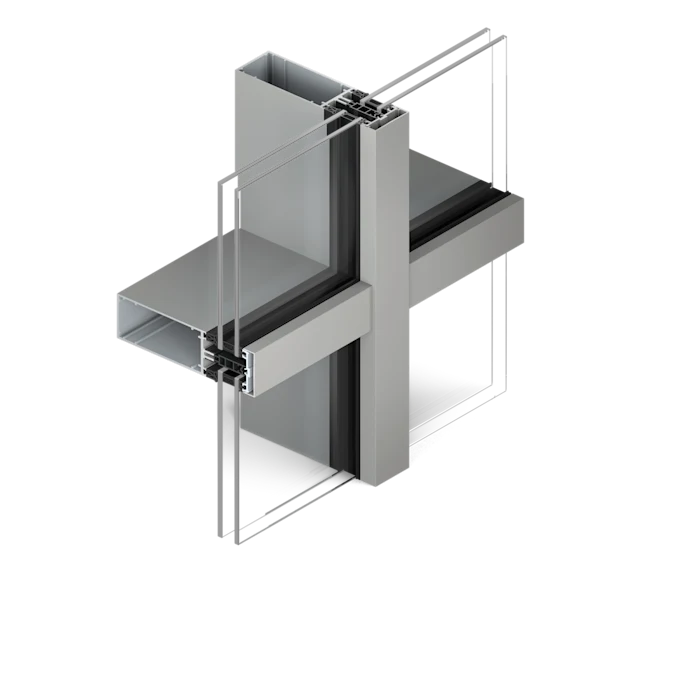
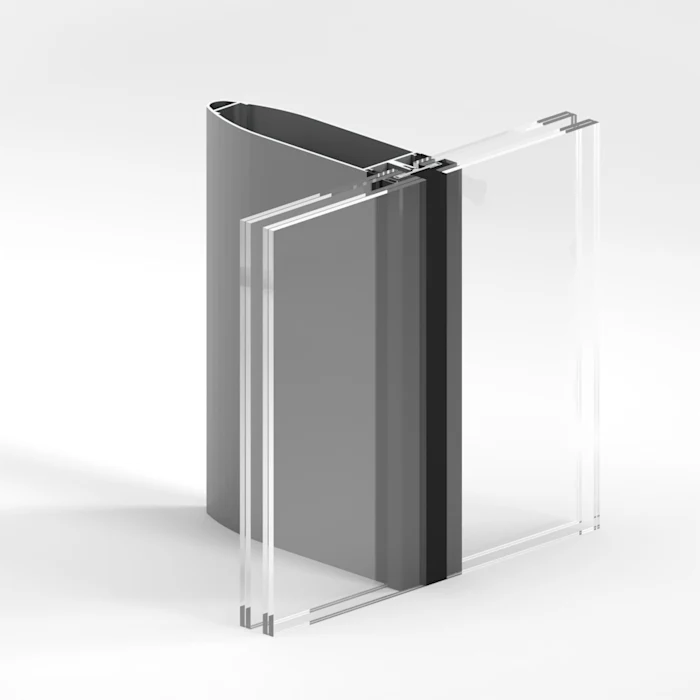
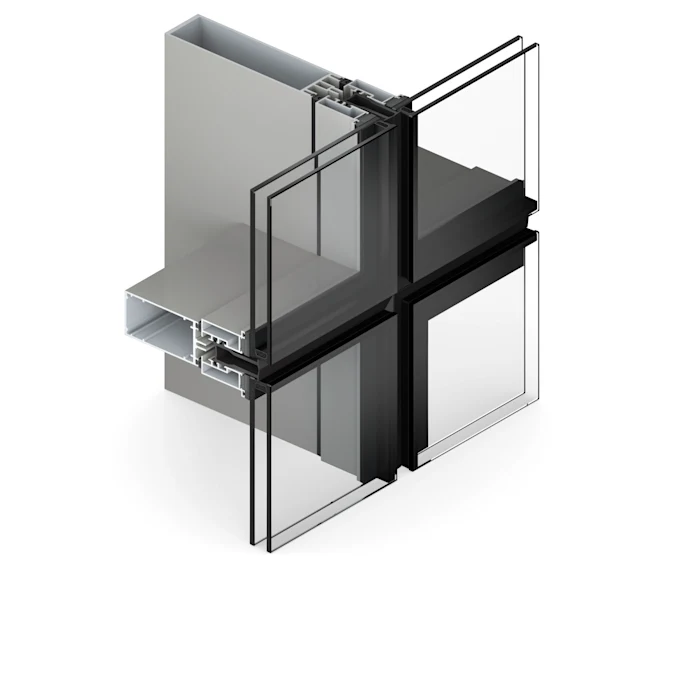
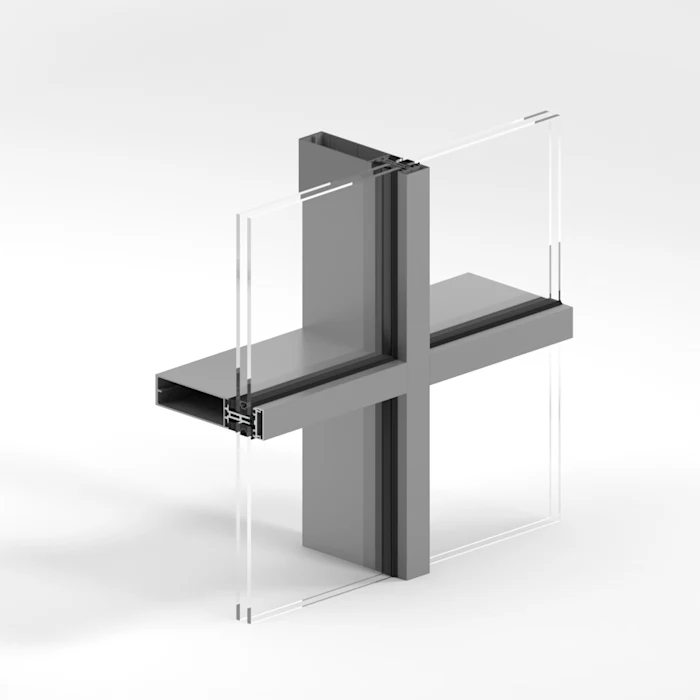
From an engineering perspective, a curtain wall window system is a non-load-bearing façade assembly that combines aluminium framing, glazed infill panels, and integrated operable windows into a single, coordinated system.
The curtain wall is fixed to the building’s primary structure and does not carry floor or roof loads. Instead, it transfers environmental forces, such as wind and weather, back to the structural frame while forming a continuous external envelope.
The system consists of individual mullions, transoms, and infill panels, which are typically assembled on-site. This approach allows a high degree of flexibility during installation and adapts well to complex façade designs, including varied geometries, stepped elevations, and bespoke architectural detailing.
Curtain wall window systems are widely used in buildings across the Middle East, from UAE and Saudi Arabia, to Kuwait and Egypt. Here, large glazed façades are a defining architectural feature. Typical applications include:
They are particularly popular for medium to large-scale projects where performance and design consistency are critical.
Aluminium frames support the glazing and window elements, ensuring consistent performance across the entire façade. Aluminium performs exceptionally well in Middle Eastern climates due to its ability to withstand demanding environmental conditions:
Heat: dimensional stability under high temperatures
Humidity: resistance to moisture-related degradation
Sand: durability against abrasion and airborne particles
Wind: high strength-to-weight ratio for tall façades
In addition to performance benefits, modern curtain wall window systems use low-carbon aluminium, supporting sustainability targets while delivering the durability and reliability required for long-term façade performance in the Middle East.
Curtain wall window systems: Stick vs unitized
Stick curtain wall with windows:
A stick curtain wall system is assembled on-site using individual mullions, transoms, and infill panels which are installed and fixed to the building's structure. This method provides a high level of flexibility during installation and adapts well to complex façade designs.
Adding a window to a stick curtain wall can improve daylight access, ventilation, and overall comfort. However, careful system coordination is necessary. Key considerations include structural alignment, air-tightness, and drainage, all of which are essential to maintaining the overall integrity and performance of the façade.
Stick curtain wall systems are well-suited to medium to large-scale projects, including offices, commercial space, hotels, and public building, where design adaptability and on-site flexibility are important.
Unitized curtain wall
A unitized curtain wall system consists of large prefabricated panels that are manufactured off-site and then installed on-site as complete units. This approach delivers high precision, faster installation, and consistent quality across the façade, as critical components are assembled and checked in controlled factory conditions.
Integrating windows within a unitized curtain wall improves natural light, ventilation, and user comfort, while also supporting enhanced thermal performance when paired with efficient glazing systems. Because windows are incorporated into the panels during fabrication, performance consistency is maintained across the entire building envelope.
Key considerations for unitized systems include panel weight, connection details, and maintaining air-tightness and uniformity across all modules. These factors must be addressed early in the design and coordination stages.
Unitized curtain wall systems are particularly suited to high-rise buildings, large commercial towers, and projects with tight construction deadlines, where speed, quality, and repeatability are critical.
Why architects prefer curtain wall over window wall systems
Architects often prefer curtain wall systems over window wall systems because they allow larger glazing spans and a more consistent façade appearance across multiple floors.
As the curtain wall is hung from the building structure rather than sitting between slabs, loads are distributed more efficiently, supporting improved thermal continuity and reduced thermal bridging.
From a design perspective, curtain wall systems offer greater architectural freedom, including minimal sightlines, the ability to integrate shading or façade accessories, and adaptability for complex or non-linear building forms.
Technically, curtain wall systems deliver higher air and water performance, more effective acoustic insulation options, and greater resistance to building movement, making them better suited to high-performance and high-rise applications.
Design considerations for modern curtain wall window systems
Structural performance under Middle Eastern climatic loads
Curtain wall window systems must be engineered to resist high wind loads, accommodate thermal expansion, and manage solar gain caused by intense heat and sunlight.
Acoustic & thermal insulation
Effective glazing and thermally broken frames improve cooling efficiency, support operational carbon reduction, and enhance internal comfort.
High-performance aluminium frames & coatings
Advanced aluminium frames and coatings provide corrosion resistance and long-term durability, particularly in coastal and humid environments.
Sustainability & low-carbon aluminium in façade systems
TECHNAL curtain wall systems use aluminium with up to 75% recycled content and are 95% recyclable at the end of life.
Low-carbon aluminium helps projects meet LEED, Estidama, and Green Building requirements across the region, while reducing embodied carbon, now a key differentiator in the Middle East construction market.
Curtain wall window system installation methods
Site installation for stick systems
Stick curtain wall systems are assembled on site, with mullions and transoms installed sequentially and fixed to the primary structure.
Once the frame is aligned and secured, gaskets, pressure plates, and glazing are installed to complete the façade. Mechanical brackets are fixed to slab edges or beams, using adjustable anchors and expansion allowances to accommodate building movement. Strict vertical and horizontal tolerances are maintained to ensure correct alignment, water management, and long-term façade performance.
When operable windows are integrated, reinforced interfaces and clear drainage paths are essential to maintain system integrity.
Off-site prefabrication for unitized systems
Unitized curtain wall systems are manufactured as large prefabricated panels in controlled factory conditions, where framing, glazing, insulation, and gaskets are assembled and tested for air and water performance. This process ensures high repeatability, consistent quality, and tight tolerances.
On-site, pre-glazed panels are lifted into position and secured using pre-designed anchors, with interlocking profiles providing structural continuity.
Integrating windows at the factory allows precise installation while maintaining uniformity across the façade and supporting faster project delivery.
Fabricator support & technical guidance
TECHNAL provides early design support, including structural calculations, wind-load assessments, and system feasibility checks.
Professionals can access installation guidelines, drawings, and profile compatibility data via MyTECHNAL, ensuring each curtain wall and window system aligns with both architectural intent and performance requirements.
Project teams receive CAD and BIM details for junctions and interfaces, along with on-site support to verify alignment, performance, and compliance with EN, CWCT, ASTM, and project-specific standards.
How much does a curtain wall window system cost?
Costs vary based on glazing specification, frame profiles, coatings, acoustic and thermal performance, façade complexity, and installation method.
As a high-performance façade element, pricing depends on engineering requirements. Improved insulation can reduce cooling loads and long-term operating costs.
Choosing the best curtain wall window system for your project
Key criteria include:
performance certifications, climate resilience, sustainability targets, façade geometry, and maintenance cycles.
TECHNAL supports bespoke and complex projects through advanced testing and innovation centers.
Why choose TECHNAL for high-performance curtain wall systems?
TECHNAL offers decades of experience, a global presence, and dedicated innovation centers. Our systems use low-carbon, recyclable aluminium and are proven in harsh Middle Eastern climates. Architects, developers, and fabricators benefit from specialist technical support.
Contact TECHNAL to discuss custom curtain wall window systems.
Your products