Aluminium Façade Systems
High-performance curtain wall systems that combine design freedom with structural reliability—engineered to enhance transparency, insulation, and architectural expression.
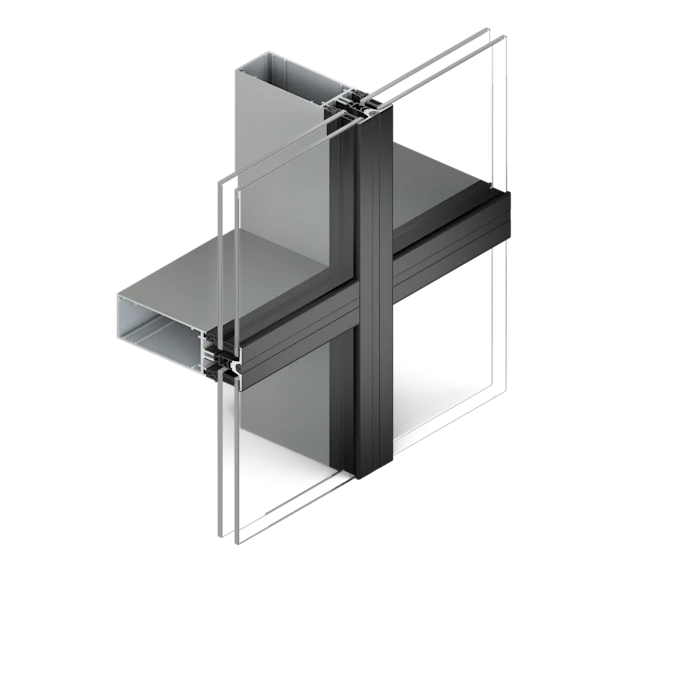
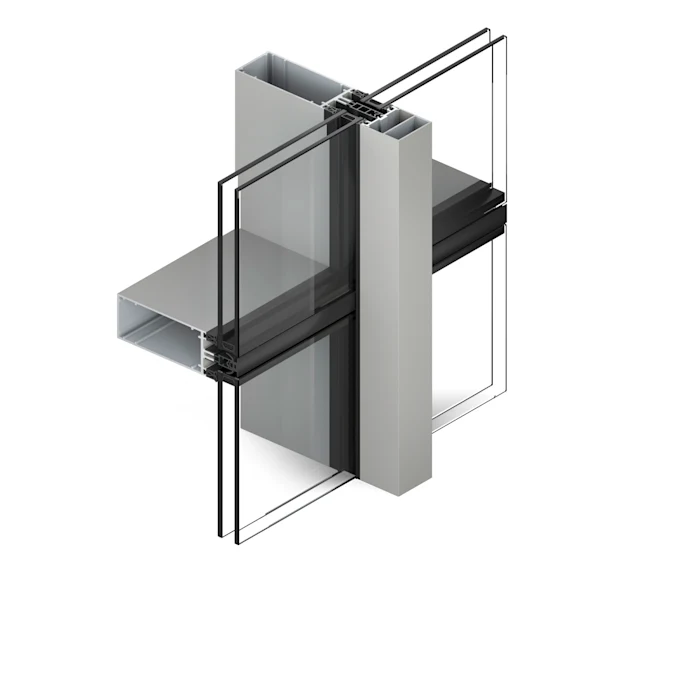
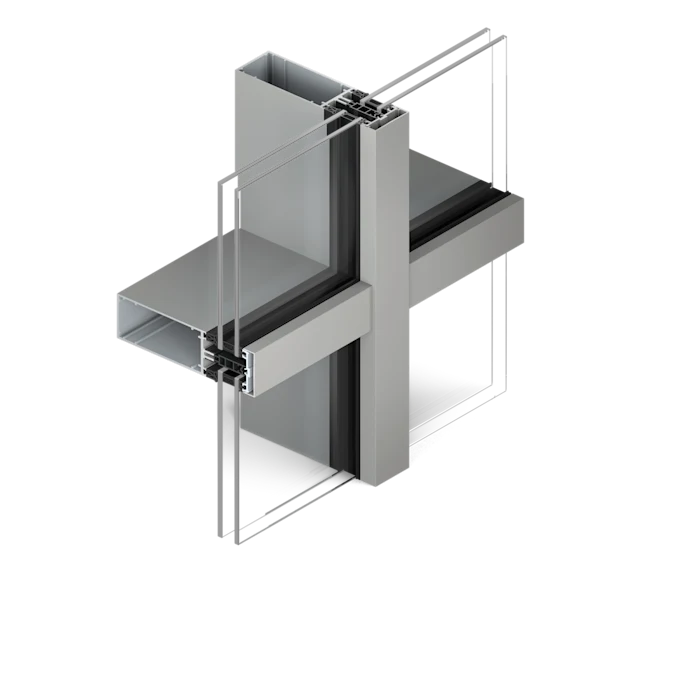
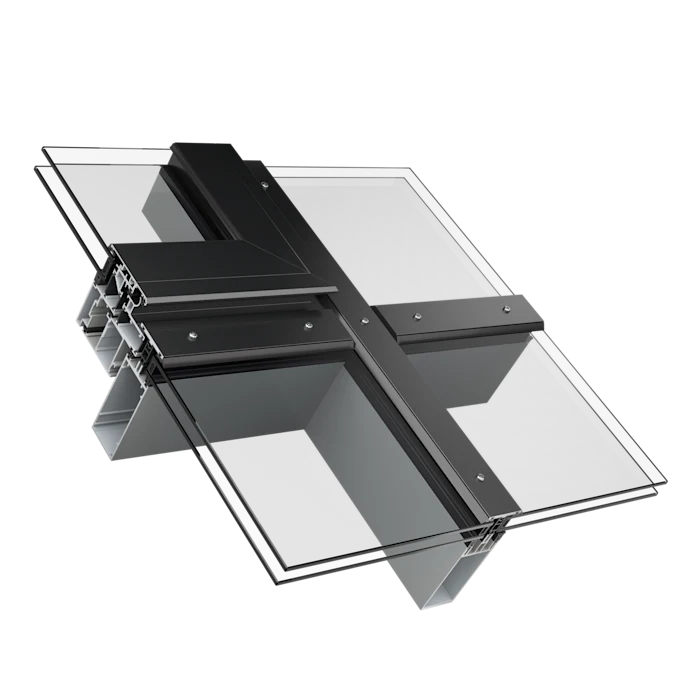
Discover other TECHNAL aluminium solutions

Product characteristics
Aluminium Curtain Wall System
A curtain wall system is a non-structural façade that encloses a building. It provides protection, energy efficiency, and modern design flexibility.
A curtain wall system is a type of non-structural exterior cladding that forms the outer skin of a building. Unlike load-bearing walls, it does not support the structure, but instead transfers its own weight back to the main frame.
Its primary role is to protect the interior from wind, water, and temperature fluctuations while providing insulation and modern aesthetics.
With more than 45 years of expertise, TECHNAL has become a regional leader in aluminium curtain wall systems. Known in the Middle East for innovation, sustainability, and technical authority.
To meet current design needs, TECHNAL curtain wall systems are built with slim aluminium framing and large glass panels, creating a lightweight yet durable façade.
The TENTAL system has been adapted to accommodate larger loads to achieve the desired look.
Aluminium is lightweight, recyclable, and resilient, making it ideal for curtain walling systems in hot, humid, and sandy Middle Eastern environments.
Whether it’s a high-rise tower or a bespoke curtain walling system for a landmark project, TECHNAL provides architects, developers, and fabricators with sustainable, high-performance solutions built for the region.
Thanks to their modular design, these systems can be adapted to complex geometries and high-rise structures. The result is a building envelope that combines technical performance, energy efficiency, and architectural freedom.
A curtain walling system acts as a lightweight skin that attaches to the main structure of a building. While it is non-structural, it performs several critical functions:
-
Load distribution – The aluminium frame is self-supporting, transferring its own weight and the weight of the glass safely back to the structural framework. This ensures stability without overloading the building.
-
Weatherproofing – Advanced sealing and drainage systems protect interiors from air leaks, driving rain, and dust infiltration. This is especially important in regions with intense sandstorms, high humidity, and sudden temperature shifts.
-
Modularity and flexibility – Curtain walling systems are designed in modular sections, making them adaptable to complex geometries such as sloped facades, curved profiles, or irregular high-rise towers. In hot climates like the Middle East, this flexibility allows architects to optimise natural light while minimising solar gain, reducing cooling loads, and improving overall comfort.
By combining structural safety with energy efficiency and design freedom, curtain wall systems enable buildings to perform reliably in both everyday urban conditions and extreme desert environments.
-
For a curtain wall system to deliver long-term performance, it must meet five essential requirements. Each plays a critical role in protecting the building and improving efficiency:
-
Structural stability – The system must safely resist wind loads, seismic movements, and the weight of the façade itself. This ensures building integrity and occupant safety, particularly in high-rise projects exposed to strong desert winds.
-
Water and air tightness – Seals and drainage must prevent water leaks and uncontrolled airflow. Effective tightness protects interior spaces from humidity and sand, while also reducing energy loss.
-
Thermal performance – Insulated profiles and glazing limit heat transfer, lowering operational carbon and cutting cooling costs. This is vital in hot climates, where air conditioning can account for a large share of energy use.
-
Acoustic insulation – Noise reduction is essential for homeowners’ comfort in dense urban settings. High-performance curtain walling systems can significantly reduce traffic, construction, or airport noise, creating a quieter indoor environment.
-
Durability and low maintenance – The facade must withstand UV exposure, sand abrasion, and temperature extremes with minimal upkeep. Durable aluminium and advanced finishes extend lifecycle performance and reduce maintenance costs.
When these five elements are balanced, curtain wall systems provide both functional protection and long-lasting value for both building owners and users.
-
Different projects naturally require different façade solutions. The two most common curtain walling systems are stick systems and unitised systems. Each system offers unique benefits depending on the scale, speed, and complexity of the building design. Let’s take a look:
System Types
Stick Curtain Wall Systems
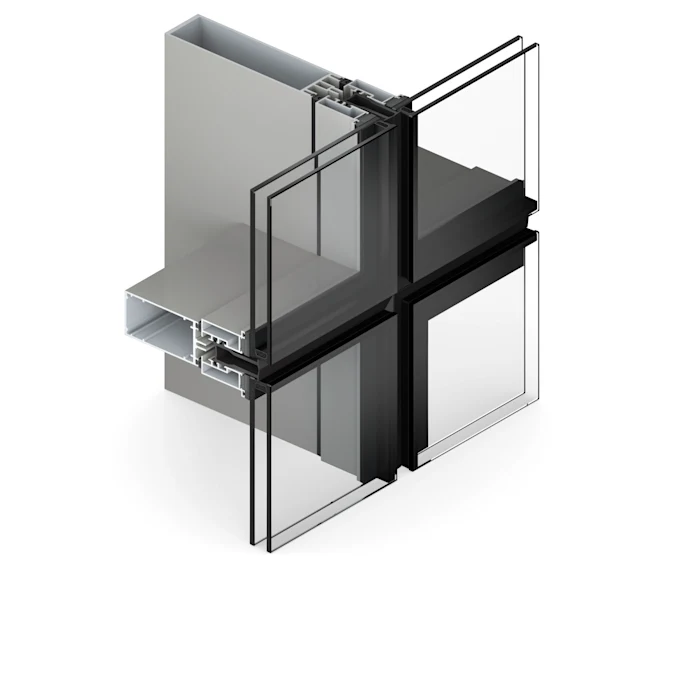
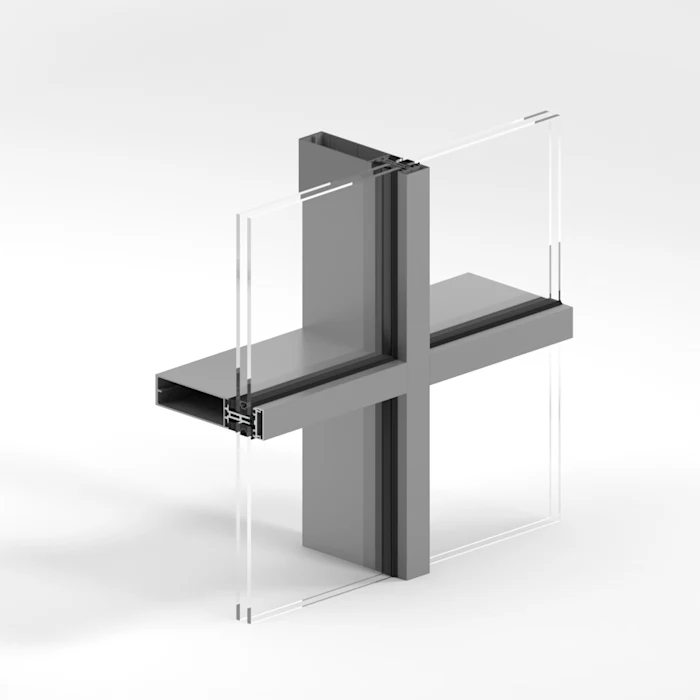
A stick curtain wall system is assembled piece by piece directly on site to create the facade grid. Vertical mullions and horizontal transoms are installed first, followed by glazing and sealing.
-
Installation method: On-site assembly allows for precise and often necessary adjustments during construction. This offers easy logistics and adaptability to construction progress.
-
Flexibility: Offers maximum design freedom during installation. This makes it useful for irregular geometries, phased construction, or when structural tolerances vary.
-
Example applications: Low- to mid-rise projects, such as offices, schools, and public buildings.
Stick curtain wall systems remain the appropriate choice for small-to-mid-scale commercial projects in the Middle East with simple facades.
While they require extensive on-site labour and quality control, their flexibility allows contractors to make unique, on-site adjustments to account for unpredictable field conditions.
Unitised Curtain Wall Systems
A unitised curtain walling system uses prefabricated modules built in factory-controlled conditions and then transported to the site for installation. Each unit includes framing and glazing, ready to be fixed into place.
-
Installation method: Pre-assembled in factory-controlled conditions and installed as large units. This ensures fast, high-precision façade execution.
-
Flexibility: Offers design flexibility through modular configurations and customised panel compositions, while maintaining quality.
-
Example applications: Best suited for high-rise towers, large commercial developments, and projects requiring rapid enclosure.
For Middle Eastern projects in cities like Riyadh or Dubai, unitised systems are especially valuable, as they combine design customisation with factory precision. This delivers distinctive architectural expressions while meeting the region’s performance and speed requirements.
Shape and Configuration Options
Curtain wall systems can also be designed in unique shapes and configurations that enhance both performance and aesthetics. Two of the most common alternatives are sloped and curved facades.
Sloped Curtain Wall Systems:
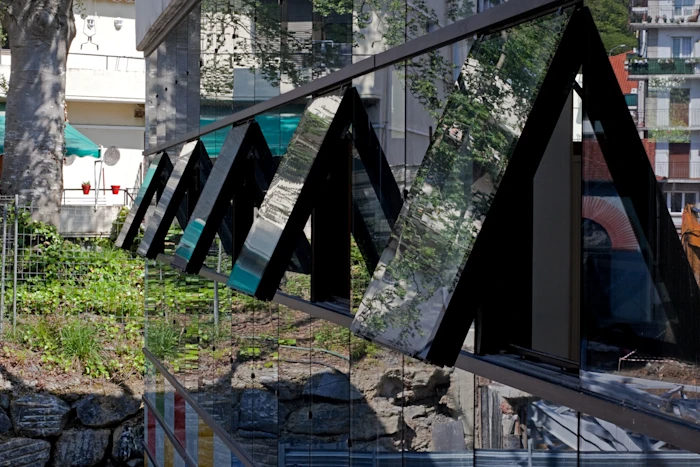
A sloped curtain wall system creates angled façades, often used for atriums, canopies, stairwells, or glass roofs.
-
Benefits: Sloped glazing maximises natural daylight, making it ideal for sunny climates. They reduce the need for artificial lighting and deliver striking architectural features that attract attention.
-
Installation considerations: Sloped systems require specialised drainage and sealing solutions to ensure water tightness, particularly in regions with heavy rain or dust storms.
-
Flexibility: Designers have more manoeuvrability. They can vary the angle to optimise solar control, balancing daylight entry with reduced heat gain in hot Middle Eastern climates.
Curved Curtain Wall Systems:
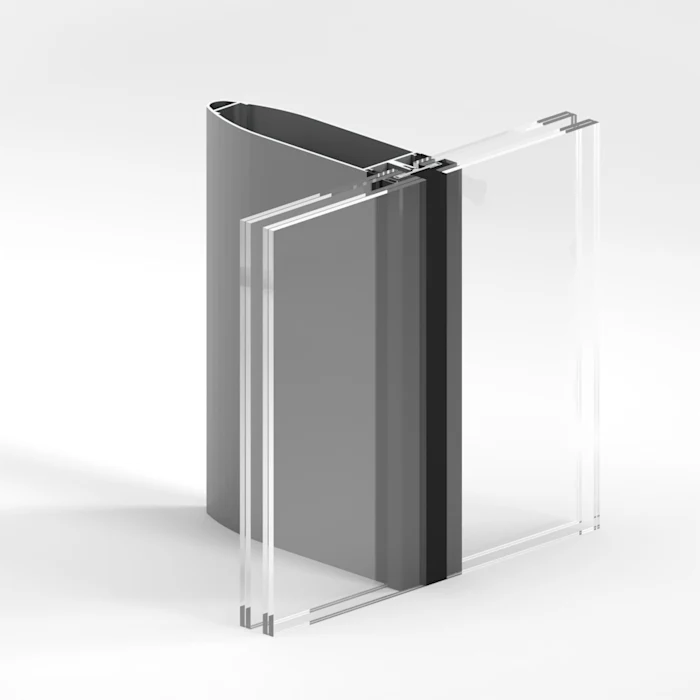
A curved curtain wall system uses either horizontal or vertical arcs to create a seamless, flowing façade.
-
Benefits: Curved façades provide a modern, elegant appearance and are often chosen for landmark projects where aesthetics are every bit as important as performance.
-
Design and technical considerations: Precision manufacturing is essential, as curved aluminium and glazing require custom fabrication. Structural stability, weatherproofing, and thermal performance must all be carefully engineered to maintain comfort and efficiency.
Both sloped and curved curtain walling systems showcase the design flexibility of aluminium, allowing architects to bring creative visions to life while ensuring the building envelope performs reliably in demanding environments.
-
TECHNAL’s aluminium curtain wall systems are engineered not only for performance but also for long-term environmental responsibility. This is a key offering when it comes to sustainable construction in the Middle East.
By combining innovation with sustainable design, TECHNAL helps developers, architects, and fabricators meet today’s performance goals while preparing for ESG requirements of the future.
Sustainability and Circularity
Sustainability is at the heart of every TECHNAL curtain walling system. Aluminium is endlessly recyclable, and TECHNAL maximises this advantage:
-
75% recycled aluminium and 95% recyclability: Reducing reliance on raw materials and cutting embodied carbon.
-
Carbon accounting and ESG support: detailed data and reporting tools help Middle Eastern developers align with international standards and regional initiatives such as Saudi Vision 2030 and UAE Net Zero 2050.
-
Low operational carbon footprint: advanced thermal insulation reduces the demand for air conditioning, significantly lowering energy use in hot desert climates.
-
Long-term value: Compared to other materials, aluminium is the strategic long-term choice. Wood or uPVC typically warp or rot in the Middle Eastern climate.
By choosing TECHNAL, clients not only reduce environmental impact but, also future-proof their projects against tightening sustainability regulations across the Middle East.
Design Flexibility & Performance
TECHNAL’s curtain wall systems are designed to combine high technical performance with incredible architectural freedom:
- Minimalist aesthetics and bespoke options: Slim aluminium profiles create clean, contemporary façades, while bespoke configurations allow allow full creative freedom in form and proportion.
- High-performance coatings: Durable surface treatments protect against heat, sand, dust, humidity, and strong desert winds, preserving both the look and integrity of the façade over time in harsh Middle Eastern conditions.
- Acoustic and thermal insulation: Advanced glazing and insulated framing reduce solar gain and noise pollution, helping maintain comfort in urban environments where energy efficiency and sound control are critical.
- System adaptability: Available in stick, unitised, or hybrid forms and compatible with integrated vents, sliders, and doors for a coherent building envelope.
This is a key offering when it comes to balancing design creativity with reliable building performance.
Technical Support & Project Management
Beyond high-performance products alone, TECHNAL provides architects, developers, and fabricators with the right tools, knowledge, and guidance for flawless project delivery.
-
Digital Design Tools: These include TechDesign and MyTechnal platforms. Access catalogues, CAD drawings, and Revit files directly, ensuring easy integration into design workflows.
-
Engineering Expertise: Our team assist with system selection, structural calculations, wind-load analysis, and thermal simulations. We ensure compliance with local codes and performance criteria. For bespoke designs, avail of our engineering special solutions.
-
Project Partnership: We support you every step of the project, from concept to finish. For each phase, you will have a dedicated team to oversee fabrication, installation, testing, mock-ups, and more.
This combination of digital resources and expert consultancy ensures every curtain walling system performs to the highest standards, from design to delivery.
-
TECHNAL’s curtain wall systems are specifically engineered for the unique demands of Middle Eastern cities. Their key focus is where extreme heat, high humidity, and abrasive sand are daily challenges.
- Dubai and Abu Dhabi: Iconic skylines rely on high-rise façades that deliver energy efficiency and durability in year-round desert heat.
- Riyadh and Jeddah: Projects benefit from advanced coatings and sealing systems that withstand sandstorms, UV exposure, and high winds.
- Cairo: Acoustic insulation ensures comfort in dense urban areas, while thermal performance reduces cooling loads in long, hot summers.
- Kuwait City: Coastal humidity and saline conditions are countered by aluminium’s corrosion resistance and TECHNAL’s specialised finishes.
Middle Eastern cities present unique architectural challenges for curtain wall systems. Extreme heat, high humidity, abrasive sand, and coastal conditions demand façades that balance performance, durability, and energy efficiency.
- High-Rise Commercial Towers: Cities like Dubai and Abu Dhabi feature iconic skyscrapers where curtain walls must deliver thermal efficiency, structural integrity, and aesthetic appeal. Advanced glazing and insulation help reduce cooling loads in year-round desert heat.
- Urban Residential & Mixed-Use Projects: In Cairo, high-density urban environments require façades with acoustic insulation to ensure comfort, while thermal performance lowers energy consumption during hot summers.
- Desert & Sandstorm-Prone Areas: Projects in Riyadh and Jeddah face frequent sandstorms and intense UV exposure. Curtain walls benefit from specialised coatings, advanced sealing systems, and aluminium finishes to maintain durability and appearance.
- Coastal & Humid Environments: In Kuwait City, coastal humidity and saline air can corrode standard materials. TECHNAL’s aluminium systems with specialised treatments protect façades while ensuring longevity.
By adapting to these regional conditions, TECHNAL provides curtain walling systems that balance design freedom with reliable performance across the harshest environments.
Curtain Wall System Performance and Compliance
When selecting a curtain walling system, certifications are essential for proving performance, safety, and compliance. TECHNAL ensures its systems meet the highest international and regional standards, giving architects and developers full confidence in specification.
Key certifications include:
- Thermal and acoustic performance: Independent testing confirms compliance with energy efficiency and comfort requirements.
- Air and water tightness: Verified performance against international standards for weather resistance, crucial in humid and sandy climates.
- Structural and seismic testing: Ensures façades can withstand high wind loads, building movements, and seismic conditions.
- Fire safety certification: Alignment with global fire resistance standards to protect building occupants and infrastructure.
- Regional compliance: Full adherence to Middle Eastern building codes, ensuring suitability for projects across the UAE, Saudi Arabia, Egypt, and Kuwait.
This rigorous certification process positions TECHNAL’s curtain wall systems as trusted solutions for projects requiring both global quality assurance and local compliance.
With more than 60 years of expertise, TECHNAL is a global leader in aluminium curtain wall systems, trusted by architects, developers, and fabricators around the world.
-
Global footprint: 8 production facilities and 4 innovation centres drive continuous research and product development.
-
International presence: Operating in over 80 countries with 450+ showrooms, TECHNAL offers both global reach and local support.
-
Proven expertise: A strong track record delivering complex façades, bespoke architectural designs, and high-performance projects across multiple sectors.
-
Commitment to sustainability: Aluminium systems that are sustainable, high-quality, and low-maintenance, ensuring value over the entire building lifecycle.
This combination of innovation, international reach, and sustainable performance makes TECHNAL the partner of choice in the Middle East and beyond. Contact TECHNAL today for information on our curtain walling systems.
-